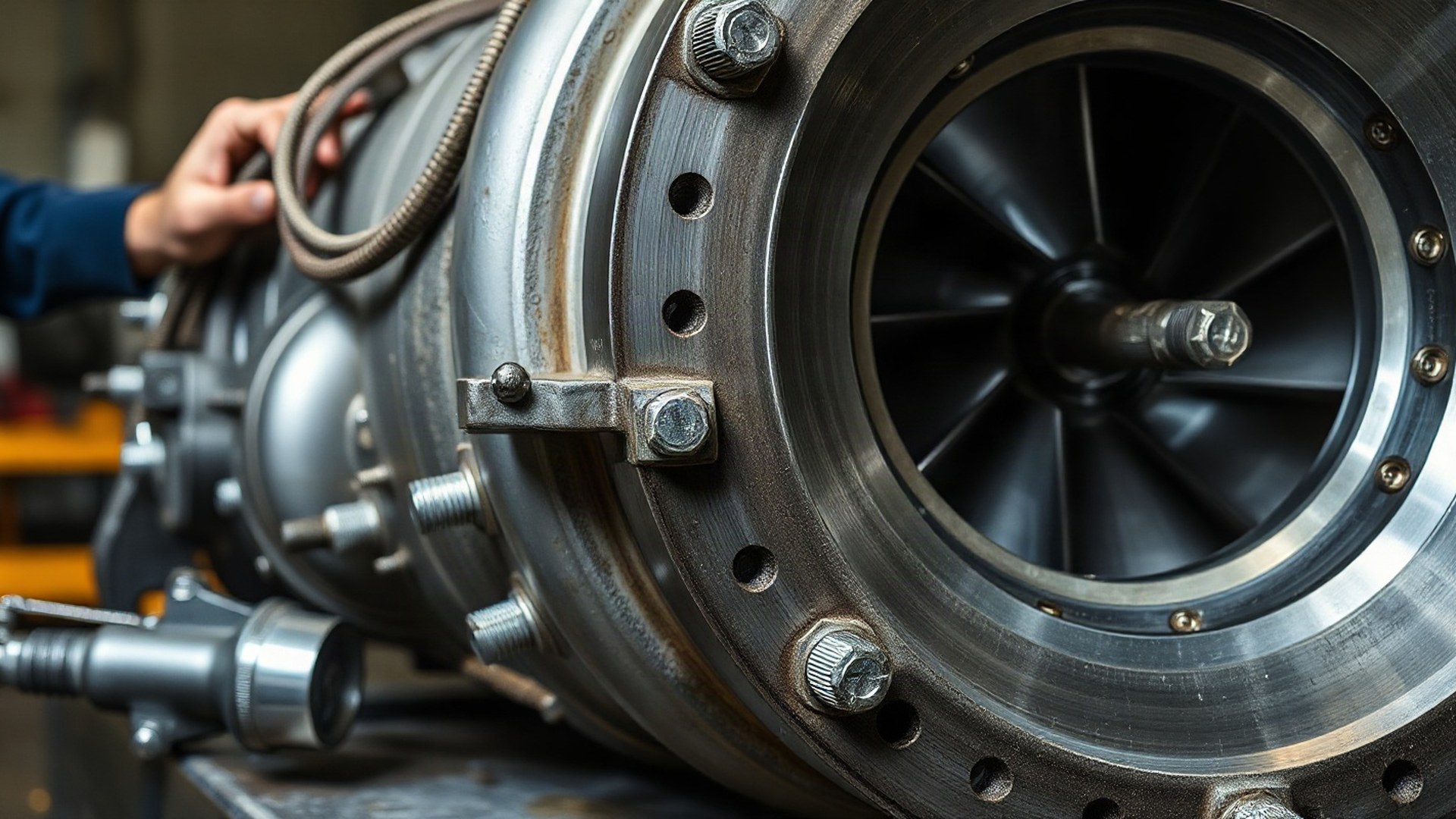
Imagine paying billions of dollars for hardware you cannot touch today, simply because the alternative is standing in line until the next decade. Over the weekend, reports surfaced that frontier AI lab Anthropic agreed to hand over roughly $3.4 billion for 1.7 gigawatts of heavy-duty gas generators. Here is the kicker: Anthropic did not buy them from the factory floor. It bought an order book slot placed two years ago by a Texas power developer named OnePWR Solutions.
In the AI race, waiting for the electric utility feels like trying to charge your phone with a lemon and two copper wires. The queue itself has become a tradable asset, and Caterpillar owns the queue.
| Price LIVE | $558.63 |
| Market Cap | ~$255.6B |
| Forward P/E | 17.3× |
| Total Revenue (TTM) | $77.8B |
| 52-Week Low | $537.08 |
| 52-Week High | $1,073.46 |
| Analyst Consensus | Buy (26 analysts) |
| Analyst Target Mean | $823.41 |
Most people still picture Caterpillar as the yellow-iron king of bulldozers, dump trucks, and highway construction. But the engine driving its modern narrative is far duller and much more lucrative: it builds the machines that make electricity. Through its Power & Energy segment and its San Diego subsidiary, Solar Turbines, Caterpillar manufactures massive reciprocating gas engines and industrial turbines running up to 39 megawatts. Think of Caterpillar as the landlord of emergency power. If you run a data center and the local grid tells you a substation hookup will take four years, you buy your own power plant and stick it behind the fence.
Now for the mechanical reality of this deal. Caterpillar was not sitting at the negotiating table, and it did not book a single new dollar from Anthropic. The generators were ordered roughly twenty-four months ago and already sat inside Caterpillar’s backlog. A secondary trade between two third parties adds no new revenue, no new units, and no price hike to the manufacturer.
Yet that is precisely why the story matters. In normal industrial cycles, customers cancel orders or ask for discounts when lead times stretch. In the AI buildout, the bottleneck has shifted from Nvidia silicon to raw electrons. Big-frame utility turbines are booked out for years.
Caterpillar told investors on its latest call that it is taking reciprocating engine orders out to 2029 and turbine commitments into 2030. Anthropic’s reported $3.4 billion outlay works out to roughly $2,000 per kilowatt for equipment and installation. When an AI company treats your order slip like a scalped ticket to a sold-out concert, you have absolute pricing power.
The company's third-quarter earnings proved the engine is humming. Total revenue rose 17% year over year to nearly $20.7 billion, with adjusted earnings surging more than 45%. The standout was Power Generation, where revenue climbed 30% to $3.4 billion—almost the exact dollar figure Anthropic just traded for OnePWR’s position. Caterpillar’s total backlog swelled to a record $78.1 billion, with $32.6 billion of that work not even scheduled for delivery over the next twelve months. Management is already moving to nearly triple its large reciprocating engine capacity by 2030.
So why does the equity tell a different story? Shares have been cut nearly in half since their summer highs, sliding into a forward multiple of roughly 17 times earnings. The Street is not cutting its profit forecasts; consensus ratings sit firmly at a buy. The entire fight is over the valuation multiple.
Wall Street is asking whether this monster backlog represents a permanent infrastructure shift or a cyclical peak disguised in an AI costume. To re-rate higher, Caterpillar must prove its power margins can hold above 24% while converting that distant $32.6 billion backlog into cash without suffering cancellations. If this demand is durable, 17 times forward earnings is cheap for double-digit industrial growth.
The short-sellers, however, see a classic trap. The bear case argues that behind-the-meter gas generators are merely temporary bridge power. Data centers are paying an absurd speed premium today because utility interconnections are stalled. The moment regional grids catch up and turbine capacity normalizes, those urgent generator orders will dry up.
Worse, running massive gas engines on-site requires environmental permits that are getting bogged down in court. A federal judge is already letting a pollution lawsuit over on-site turbines proceed in Memphis, and Texas recently froze some data center approvals pending an audit. Add in over $2 billion in annual tariff headwinds and the fact that this splashy Anthropic transaction created zero new backlog, and the skeptics look armed. Buying peak earnings on a cyclical bridge is how industrial investors lose their shirts.
What we are watching next is the fourth-quarter report in early 2027. Investors need to see whether multi-year backlog conversion accelerates and whether Power & Energy margins sustain their current highs. If another hyperscaler steps up to buy an existing queue slot, the multiple will take care of itself.
Caterpillar does not need to sell more engines to prove its point.
Disclosure: The Signal holds no position in CAT. Positions may change. This is not financial advice.