If you want to build an artificial intelligence cluster today, buying high-end processors is the easy part. Plugging them in is where the plan usually falls apart. Utilities across the country are telling tech giants that standard grid connections will take half a decade or longer. That bottleneck has turned kilowatt-hours into the sharpest constraint in modern computing.
| Price | $236.30 |
| Market Cap | $69.6B |
| Forward P/E | 47.97 |
| Total Revenue (TTM) | $3.11B |
| 52-Week Low | $75.70 |
| 52-Week High | $351.28 |
| Analyst Consensus | Buy (26 analysts) |
| Analyst Target Mean | $284.58 |
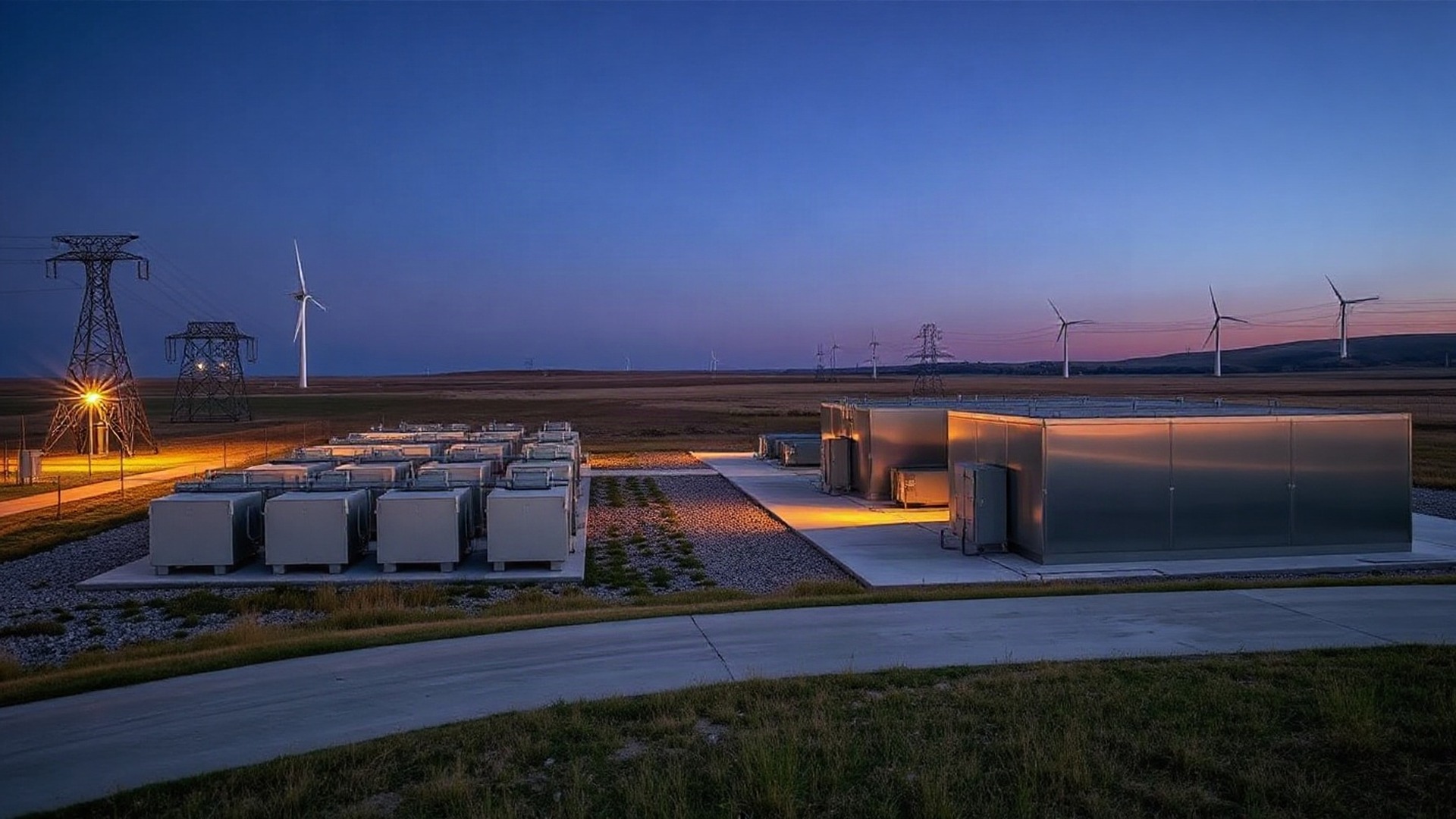
Bloom Energy exists to bypass that waiting room entirely. The company manufactures solid-oxide fuel cells inside factories in California and Delaware, packs them into steel containers, and trucks them straight to commercial job sites. Inside each box, stacks of specialized ceramics convert natural gas or biogas into electricity through an electrochemical reaction. There is no open flame, no spinning turbine, and no multi-year wait for an electrical substation. Think of Bloom as flat-pack power: instead of hiring a construction crew to build a traditional brick-and-mortar plant over five years, you order a modular appliance that begins running in months.
That speed is why Bloom suddenly matters to every hyperscaler in Silicon Valley. Consider the alternative options. GE Vernova sits on a massive 116-gigawatt backlog for traditional gas turbines, meaning fresh industrial orders face delivery dates stretching out to 2031. Advanced nuclear reactors sound promising in pitch decks, but commercial deployments remain a decade away. Bloom, by comparison, regularly delivers working capacity in six to nine months.
Its hardware also generates 800-volt direct-current power natively. That matches the internal architecture of the newest server racks, cutting the bulky conversion gear out of the design entirely.
That time advantage just turned into a signature order. On October 14, utility giant American Electric Power revealed plans to invest roughly $4 billion to construct a 702-megawatt fuel cell installation near Cheyenne, Wyoming. The entire facility will power Google under a 20-year power purchase agreement, backing a sprawling campus known as Project Tembo that local reporting ties to $17 billion of infrastructure. The project is seven times larger than AEP’s previous fuel cell deployment. As AEP chief executive Bill Fehrman noted, the utility is pairing new hardware with big partners to roll out energy quickly and at scale.
Meeting that appetite requires serious factory throughput. Bloom is currently expanding its Fremont manufacturing footprint from one gigawatt to two gigawatts of annual capacity by the end of 2026. That velocity showed up earlier this year in an Oracle agreement for up to 2.8 gigawatts of capacity. Bloom had hardware on site 55 days after the deal was signed. For tech giants fighting for market share in generative computing, saving two years of construction time easily justifies a premium power bill.
Yet short-sellers will tell you that rapid factory assembly cannot fix messy real-world construction. Just last month, Oracle issued a force-majeure notice on a massive New Mexico data center campus over timeline disputes, sending Bloom’s stock into a brief tailspin before the partnership was reaffirmed. The underlying headache did not vanish: the gas pipeline required to supply the fuel cells slipped by half a year, and local installation permits were still pending. A fuel cell with no gas line delivers zero watts.
And AEP protected itself in the very same week by purchasing 190 megawatts of linear generators from rival Mainspring, alongside 13 gigawatts of queued gas turbines. Bloom trades near 48 times forward earnings while trailing GAAP earnings sit below a dollar per share. The market is paying top dollar for flawless execution, and Bloom shares slid roughly 9% the day the AEP project was announced.
For the equity to sustain its premium rating, Bloom has to prove that rapid equipment drops translate into high-margin recurring income. The operational signal to track is non-GAAP gross margin, which printed at 34.3% in a record second quarter that generated $1.065 billion in revenue. If Bloom can maintain that margin profile while scaling toward its full-year guidance of roughly $4 billion in sales, it proves that its modular units command real pricing power over traditional utility hardware. If margins compress under supply chain friction, the multiple will contract sharply.
The immediate sanity check arrives on October 22, when Bloom reports third-quarter numbers that show whether cash generation is tracking its aggressive full-year operating income target of $800 million to $900 million.
A power plant on wheels is a brilliant product, but it still requires a pipe in the dirt.
Disclosure: The Signal holds no position in BE. Positions may change. This is not financial advice.