
Axon borrowed $1 billion at zero percent interest, and the market punished it anyway. The company sells the gear and software that runs American policing: Tasers, body cameras, the cloud where the video lives, and the AI that writes the report. Shares were down about 9% in midday trading, off as much as roughly 11% intraday.
Here's why this matters beyond one balance sheet. Axon is one of the few AI vendors paid out of public budgets instead of corporate software lines. Its agents answer 911 calls, draft incident reports, and fly drones to scenes ahead of officers. All of it runs on the same platform those cameras already feed.
| Price LIVE | $490.18 |
| Market Cap | $39.8B |
| Forward P/E | 46.4 |
| Total Revenue (TTM) | $3.2B |
| 52-Week Low | $339.01 |
| 52-Week High | $792.16 |
| Analyst Consensus | Buy |
| Analyst Target Mean | $706.21 |
The AI layer is what turns gear into a subscription. Axon's tools already draft reports from body-cam footage, field calls in place of a human dispatcher, and fuse camera feeds into a real-time crime center. Revenue the company labels AI-related grew nearly 700% year over year.
The financing itself is unusual. The notes pay no regular interest, and the principal never accretes, so Axon's only real cost is dilution. It's a registered offering off an effective shelf, not a private placement, with Goldman Sachs, Morgan Stanley, J.P. Morgan, RBC and Citi running the books.
The notes mature in September 2031, and another $150 million can be sold if the banks use the over-allotment option. Axon bought capped calls to blunt the dilution if the stock converts. Conversion terms and the cap price get set at pricing, so nobody knows the true cost yet.
Pro forma long-term debt goes from $1.75 billion to $2.75 billion. That stacks on top of $1 billion of 6.125% notes due 2030 and $750 million of 6.250% notes due 2033. Cash and short-term investments sat at $685 million in June, with the revolver undrawn.
A same-day filing shows Axon isn't waiting around. The company amended its credit agreement to lift the revolver from $300 million to $500 million, plus a $150 million accordion, with maturity pushed out toward 2031. That amendment only takes effect if the notes close, which makes the whole package one move.
Axon has been buying AI for two years. Carbyne, its cloud 911 call-taking platform, closed in February for about $625 million. Prepared, an AI assistant for dispatchers, cost about $728 million. Dedrone, the counter-drone unit, came in around $391 million and just cleared $100 million of revenue in a single quarter.
The base business is paying for all of it. Revenue rose 35% to $904 million in the June quarter, the tenth straight quarter of 30%-plus growth. Annual recurring revenue reached $1.64 billion, up 39%, and future contracted bookings hit $15.1 billion. Gross margin held above 60%, and adjusted EBITDA came in at $242 million.
This is government-budget AI, and that's the part the market keeps underpricing. Axon pulls about 75% of revenue from U.S. state and local agencies. Management puts the addressable market at $159 billion, and roughly $19 billion of that is domestic state and local law enforcement, penetrated only about 15%.
Two policy tailwinds are opening that market wider. FEMA's Counter-UAS Grant Program runs up to $500 million across 2026 and 2027 for state and local drone defense. More than 1,000 public-safety agencies now hold FAA waivers for drone-as-first-responder programs. The FAA issued more of those waivers between April 2025 and February 2026 than in the prior seven years combined.
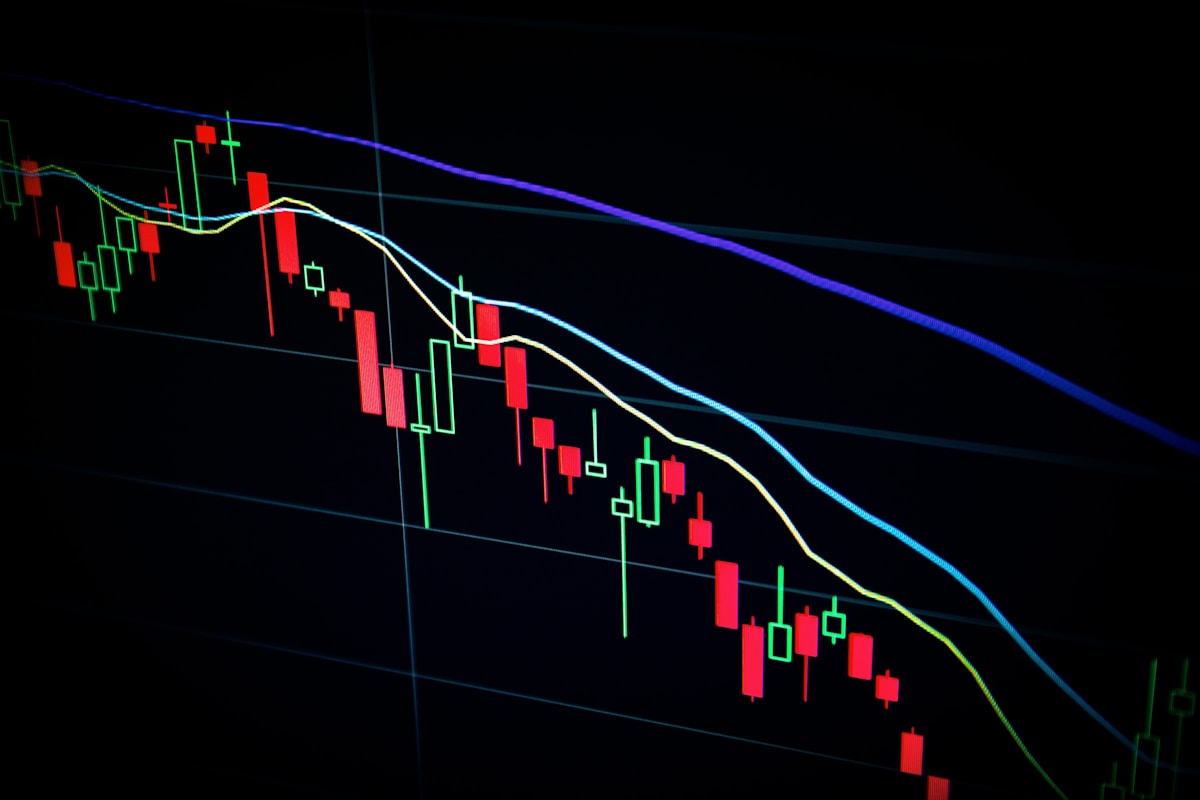
None of that makes the raise painless. Zero-coupon converts are cheap money only if the stock cooperates, and holders get paid in shares if it doesn't. Axon trades near 46 times forward earnings while shares sit more than a third below the 52-week high they set last September. The stock is down roughly a fifth since the August 5 earnings close.
The selloff and the financing describe two different companies. One is a hardware-and-software name with a rich multiple getting repriced. The other sells software into a market that's barely 15% penetrated, where the AI layer is new and the budgets are real.
Axon locked in five years of free money while its stock was down double digits. Read the use-of-proceeds language again: general corporate purposes, including capital to support growth and to acquire or invest in other businesses. That's a war chest talking, and the company has already shown how it spends one.
Disclosure: The Signal holds no position in AXON. Positions may change. This is not financial advice.