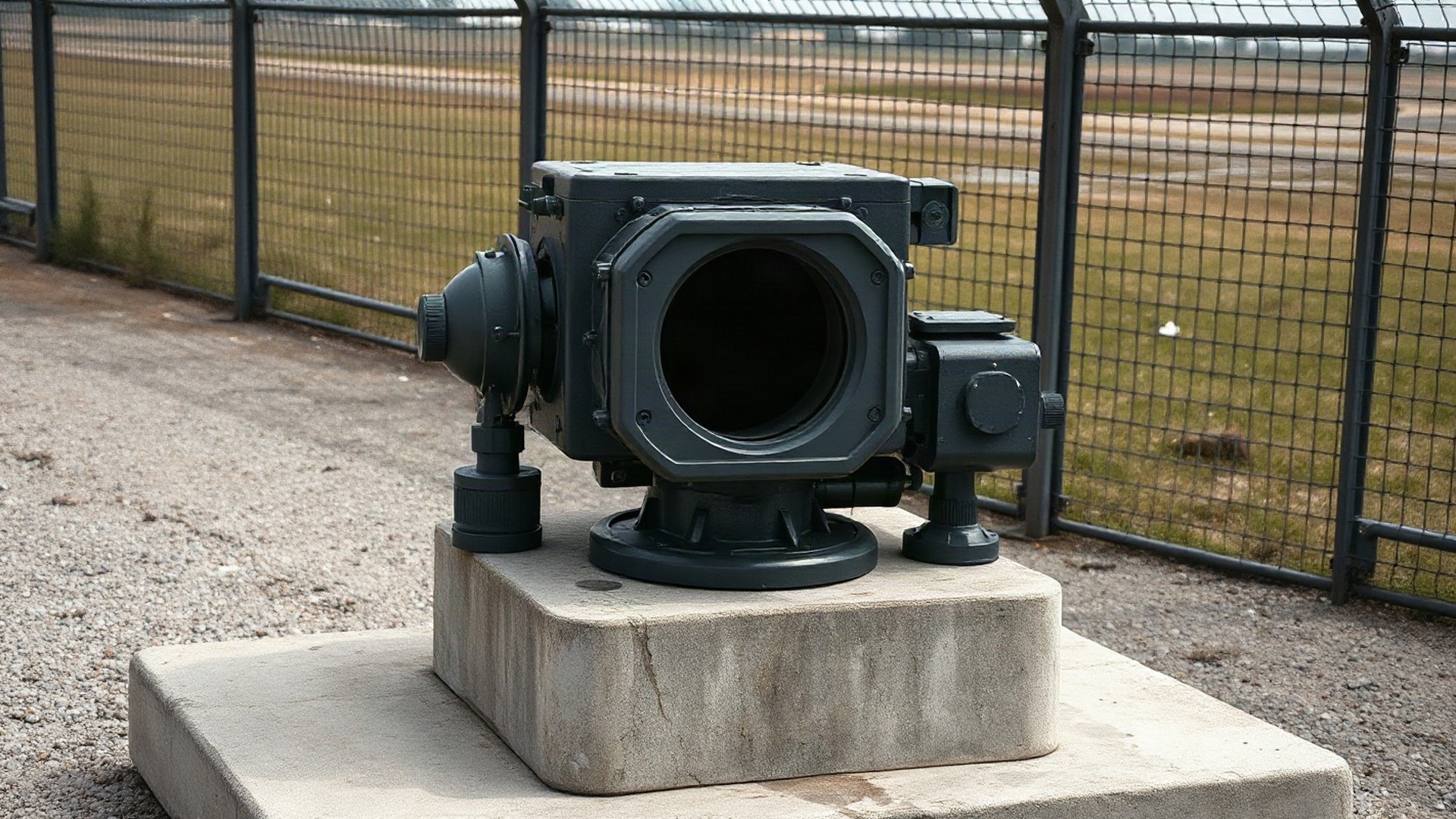
Firing a missile to down a cheap attack drone is military arithmetic at its worst. A hostile drone might cost twenty thousand dollars, while the interceptor sent to vaporize it can run up to four million dollars. Directed energy flips that script completely. A high-energy laser melts incoming threats using a few dollars of electricity per shot, roughly the price of a takeout coffee.
That math is why AeroVironment landed America's first production laser weapon deal, a $464.8 million Army contract for its LOCUST X3 system. Most people know AeroVironment as the pioneer of loitering munitions like the Switchblade and battlefield drones like the Puma. The company builds the robotic machines that spot threats and blow them up. Now, it is strapping twenty-to-thirty kilowatt lasers onto tactical trucks to fry swarming drones out of the sky.
| Price LIVE | $120.60 |
| Market Cap | $6.13B |
| Forward P/E | 27.2x |
| Total Revenue (TTM) | $2.00B |
| 52-Week Low | $120.20 |
| 52-Week High | $409.66 |
| Analyst Consensus | Buy (22 analysts) |
| Analyst Target Mean | $216.46 |
Generating the beam is actually the easy part. The real bottleneck is keeping a laser focused on a single silver-dollar-sized sweet spot while a drone maneuvers at highway speeds. Think of your phone camera locking autofocus onto a friend's face in a sprint, except missing by a millimeter means the target survives.
That is where AI takes over. AeroVironment’s AV_Halo PINPOINT software handles the kill loop: spotting the intruder, deciding how to track it, and gluing the beam in place. In modern defense hardware, the beam is just raw power; the artificial intelligence aiming it is the secret sauce.
Yet right after handing over the headline contract, the Army pulled off a classic maneuver. AeroVironment had to write eleven interface control documents, essentially surrendering the architectural blueprint to the Pentagon. The Army now owns the digital seams.
At a military conference in Washington, officials confirmed they will re-compete the internal components and subsystems behind those seams, kicking off a supplier event later this month. If AeroVironment sells off-the-rack tailored suits, the customer just declared it wants to buy its own buttons and zippers elsewhere.
That dynamic is why the equity is struggling. The shares touched a fresh 52-week low, down about 70% from their peak set late last year. While legacy defense primes rallied alongside broader contract momentum, AeroVironment drifted downward.
Investors are suddenly wondering how much profitable meat remains on the bone if rivals can plug their own parts into AeroVironment's rig. Defense competitor KBR, which markets a rival scalable laser system, already publicly cheered the chance to on-ramp its own hardware into the program.
Here is the short case, plain and unhedged. AeroVironment just gave away the keys to its hardware margins. If the Army uses open architecture to commoditize the cooling systems, power conditioning and beam directors, AeroVironment gets demoted. It becomes a low-margin systems integrator babysitting someone else’s equipment.
Meanwhile, the financial cushion is dangerously thin. The Space, Cyber and Directed Energy division that houses the laser posted an adjusted EBITDA loss of $8.9 million last quarter. A space contract cancellation left fixed overhead unabsorbed. Company-wide free cash flow was negative $36 million in the quarter and will stay negative all fiscal year as capital spending absorbs 12% to 14% of revenue. If rival suppliers win those re-competed subsystem awards at cut-rate prices, this transition year will turn into an extended margin trap.
For the stock to stage a real turnaround, the business model has to evolve from subsidized defense science into high-margin commercial tech. AeroVironment is sitting on a funded backlog of $1.5 billion, but orders alone will not fix the multiple. Management must prove it can sell the LOCUST line as a firm-fixed-price system at scale. That is what would lift the directed energy division toward the 18% margins its autonomous drone arm already enjoys.
Wall Street’s average target still sits roughly 80% above the current price, and the bulls' positive free-cash-flow call has already slipped to fiscal 2028. But until those interface re-competes play out, the market is treating AeroVironment as an integrator rather than a product company.
The immediate test arrives with the Army’s supplier industry day at the end of October. That gathering will reveal how many pieces of the truck AeroVironment gets to keep, and how much becomes open-source battlefield plumbing.
Disclosure: The Signal holds no position in AVAV. Positions may change. This is not financial advice.