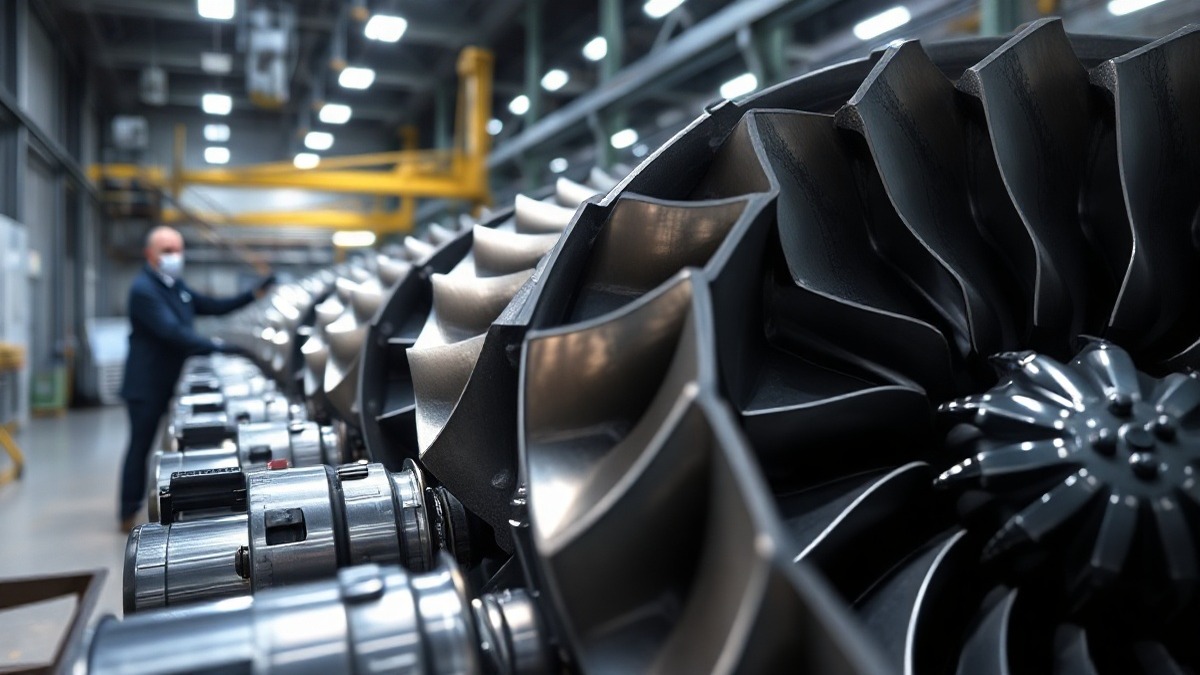
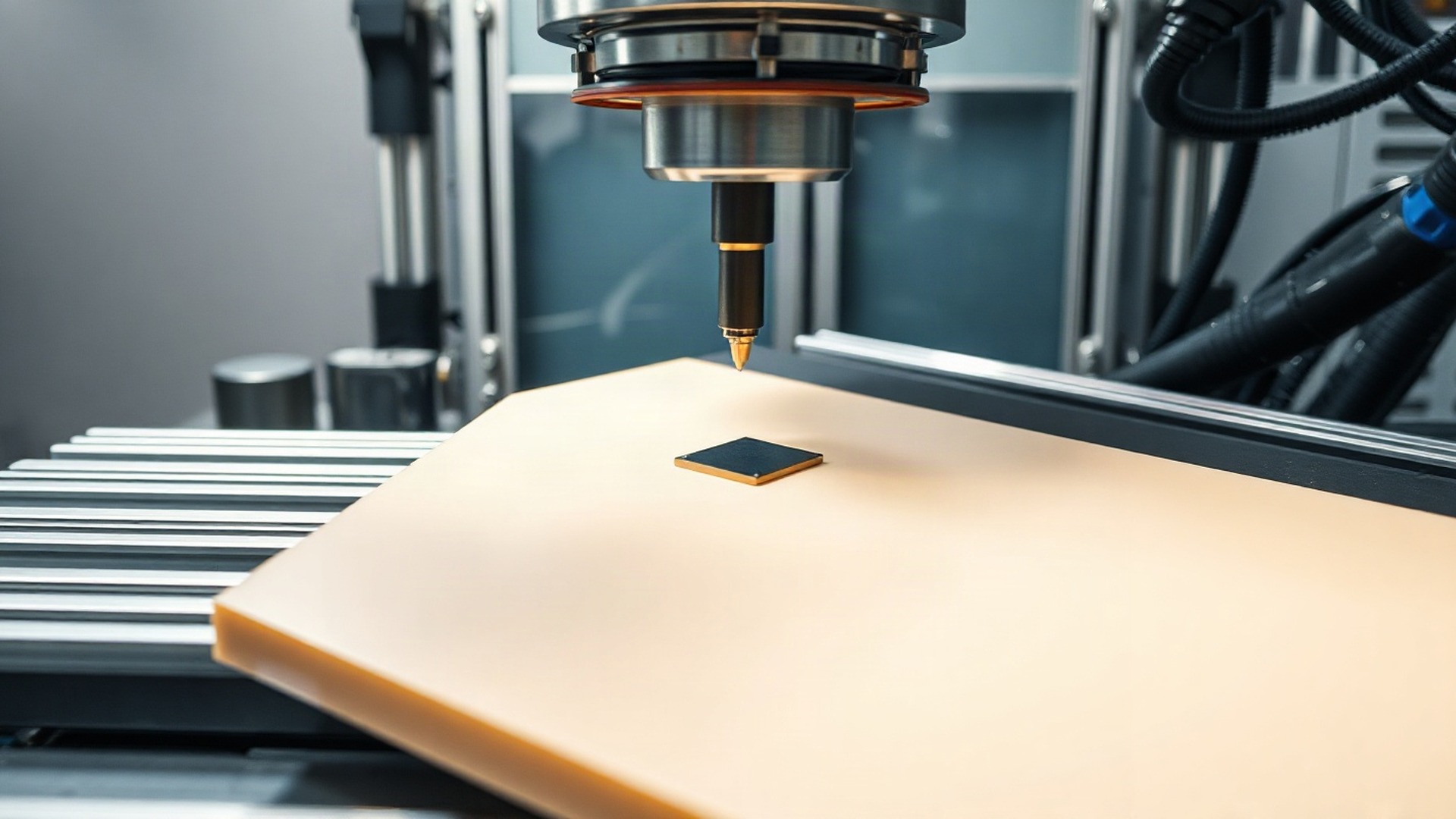
Between a finished wafer and a working AI rack sits the step the industry spent a decade dismissing as plumbing. Packaging is that step, and it decides how fast AI hardware ships.
Amkor Technology is the largest US-headquartered OSAT, meaning outsourced semiconductor assembly and test. Fabs hand it silicon; it returns finished, tested parts. Its buyers make the chips in phones, consoles, cars and AI accelerators.
An AI accelerator is several compute dies plus stacks of high-bandwidth memory in one package, so the wiring between them limits performance. Washington’s CHIPS office calls a lack of 2.5D capacity "a significant chokepoint" for generative AI demand.
Amkor posted a record $1,898 million of revenue in the June quarter, up 26% from a year earlier, with advanced products making up $1,557 million of it. Utilisation climbed from the 50s into the 70s.
The shares still trade roughly 44% below their June high, despite a bounce of about 14% off a mid-September low. Cash and short-term investments of $2.5 billion match total debt of $2.5 billion.
| Price LIVE | $52.69 |
| Market Cap | $13.06B |
| Forward P/E | 18.8 |
| Total Revenue (TTM) | $7.46B |
| 52-Week Low | $28.03 |
| 52-Week High | $96.68 |
| Analyst Consensus | Buy |
| Analyst Target Mean | $76.40 |
The wound came in late July. Revenue guidance for the September quarter landed below consensus and the shares fell about 24% in a day. The same release lifted the profit bar, guiding gross margin to 18.5% to 19.5% against the Street’s 16.4%.
So what drives the stock from here? Gross margin and the mix inside it. The chain runs 12.0%, then 14.2%, then 16.8%, now guided to 18.5% to 19.5%. Management credits compute programs displacing smartphones, not higher prices.
At roughly 19 times next year’s consensus earnings, this is a phone supplier’s multiple on a business whose fastest-growing product is AI packaging. That is too low if the mix shift keeps running. It is early rather than cheap if you use management’s own 2028 target, where the price is about 21 times earnings that look like 2026’s.
The industry backdrop is widening unevenly. UBS raised its 2027 CoWoS packaging capacity forecast to 270,000 wafers a month, with demand nearly double 2026’s. TSMC sits near 180,000 wafers a month and ASE triples from 20,000 to 70,000, while Amkor holds flat near 20,000.
NVIDIA’s multi-year partnership carries roughly $1.5 billion of advance payments, about $100 million received in July and the rest expected during 2027. The CFO has said on the record that this is a prepayment against services, not a revenue stream. TSMC signed a ten-year agreement to procure packaging and test from Amkor, though as a framework rather than a volume commitment.
Phase 2 of the Peoria campus, announced in September, takes planned investment to about $12 billion and 93,000 square metres of cleanroom. Production starts in 2028 and break-even lands around 2029. Washington contributes up to $407 million, with Apple as the first customer.
The bear case is that Amkor is a contract assembler buying growth with capital. Capex runs $2.5 billion to $3.0 billion this year against roughly $7.5 billion of trailing revenue, with free cash flow negative in the first half.
Management’s own 2028 framework calls for a 17.5% gross margin, below what it guides for the September quarter. Arizona ramps underutilised, so 2028 earnings look about like 2026’s. The ten largest customers are 66% of sales.
ASE triples capacity while Amkor stands still, Intel’s EMIB-T builds a rival architecture, and TSMC may add another OSAT partner in 2028. The 10-Q admits "historical downward pressure on the prices of our packaging and test services." A gross margin that stalls in the high teens proves them right.
Think of a port with twenty berths when the world needs eighty. You can build all the cargo you like; the port sets the schedule, and advanced packaging is that port for AI hardware.
The phone in your pocket is why the shares are cheap. Smartphones are still 42% of revenue, double computing’s 22%, and the memory shortage pinching phone build plans feeds AI demand too. A production shift out of Korea drags on that segment into the first half of 2027.
Results for the September quarter arrive in late October, and the bar is a gross margin above 18.5% while Communications revenue falls high-single-digits. If margin expands as the biggest segment shrinks, the mix story is real and the multiple is wrong.
Amkor is not a cheap stock. It is priced for 2030 attached to a business that must prove its margins belong to this decade. The silicon gets the headlines; the package decides what ships.
Disclosure: The Signal holds no position in AMKR. Positions may change. This is not financial advice.