The semiconductor complex had a rough session on Oct. 22. The Philadelphia Semiconductor Index slid 6.7% in its sharpest one-day slide since late June, and AMD fell 8.1%, one of the deepest drops among the large chip names.
Meta logged its first negative free cash flow quarter in a decade after hiking its infrastructure budget. Equipment vendor Lam Research warned that supply chain bottlenecks capped its near-term shipments. Investors looked at all three headlines and reached a hasty conclusion: big tech is overspending on artificial intelligence, and hardware suppliers will eat the margin pain.
That panic misses what AMD actually sells. AMD designs high-performance processors and outsources the actual manufacturing to TSMC. Its business spans four areas: EPYC central processors for data centers, Ryzen chips for personal computers, embedded hardware, and Instinct accelerators—the specialized graphics chips that train generative models. Next to Nvidia, AMD is the only other merchant supplier shipping AI silicon at volume.
Think of Nvidia as a luxury builder selling fully furnished mansions. AMD acts more like an architect handing out the blueprints, only billing customers for the power generator in the basement.
| Price LIVE | $507.93 |
| Market Cap | $829B |
| Forward P/E | 32.2x |
| Total Revenue (TTM) | $41.3B |
| 52-Week Low | $188.22 |
| 52-Week High | $658.52 |
| Analyst Consensus | Buy (50 analysts) |
| Analyst Target Mean | $637.61 |
The distinction matters because Wall Street keeps pricing AMD like a hardware assembler. When a technology vendor builds and ships a refrigerator-sized server rack, margins typically plunge. You have to buy third-party sheet metal, copper cabling, and cooling systems, passing them through to the client at cost.
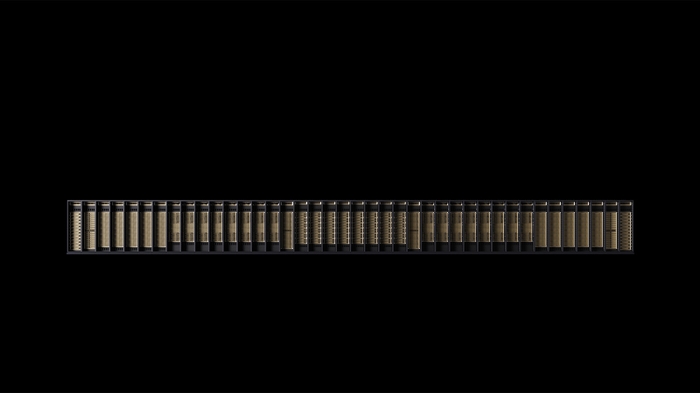
AMD does not touch that equipment. As the company noted in its latest quarterly filing, it designs the Helios platform but does not manufacture or sell the completed racks. Instead, AMD licenses the architecture and sells the silicon inside: 72 flagship Instinct MI455X accelerators wired alongside next-generation EPYC processors.
Two weeks ago, the company introduced Helion, an open-compute blueprint that lets server builders assemble their own enclosures. AMD is not in the server rack business; it is in the rack tax business.
The financial engine underneath that model is accelerating. AMD generated $11.5 billion in revenue last quarter, climbing 50% year over year. Its data-center segment more than doubled to $6.7 billion, now making up 58% of total revenue. That growth lap looked wider because the year-ago period absorbed an $800 million inventory charge tied to export restrictions, but the momentum remains undeniable.
Non-GAAP gross margin reached 56%, up 13 percentage points from a year prior. If rack integration diluted profits, you would see margins slipping. Instead, higher silicon volumes are driving them up.
That split between silicon and sheet metal explains why this equity moves so violently. AMD trades at roughly 32 times forward earnings, while Nvidia trades near 13 times.
That premium only holds up if data center keeps compounding, since it is now more than half the top line and every point of share gained against Nvidia expands the multiple. For the stock to push higher, AMD must convert massive deployment promises into billed chip revenue while keeping gross margins parked at 56%.
The bear case argues that AMD has written checks its partners cannot cash. The company leans heavily on a tiny roster of anchor buyers, with OpenAI, Meta, and Anthropic accounting for roughly 14 gigawatts of commitments. AMD purchased part of that loyalty with equity, granting penny warrants for up to 320 million shares that could dilute existing owners by nearly a fifth.
Meanwhile, Nvidia's CUDA software platform still enjoys a decade-long developer lead, and its Vera server processors now threaten AMD’s core EPYC franchise. If supply bottlenecks delay partner rack builds, AMD cannot recognize chip revenue. Growth would stumble against the current $13 billion quarterly revenue guidance, proving the bears right and rendering a 32-times multiple impossible to defend.
What we are watching is the November 3 earnings print after the market close. Management previously projected third-quarter sales of roughly $13 billion, and investors need to see whether partner supply pinches push Helios deliveries out of the fourth quarter. If server makers assemble their boxes on schedule, AMD captures pure silicon margins without the assembly drag Wall Street feared.
Disclosure: The Signal holds no position in AMD. Positions may change. This is not financial advice.