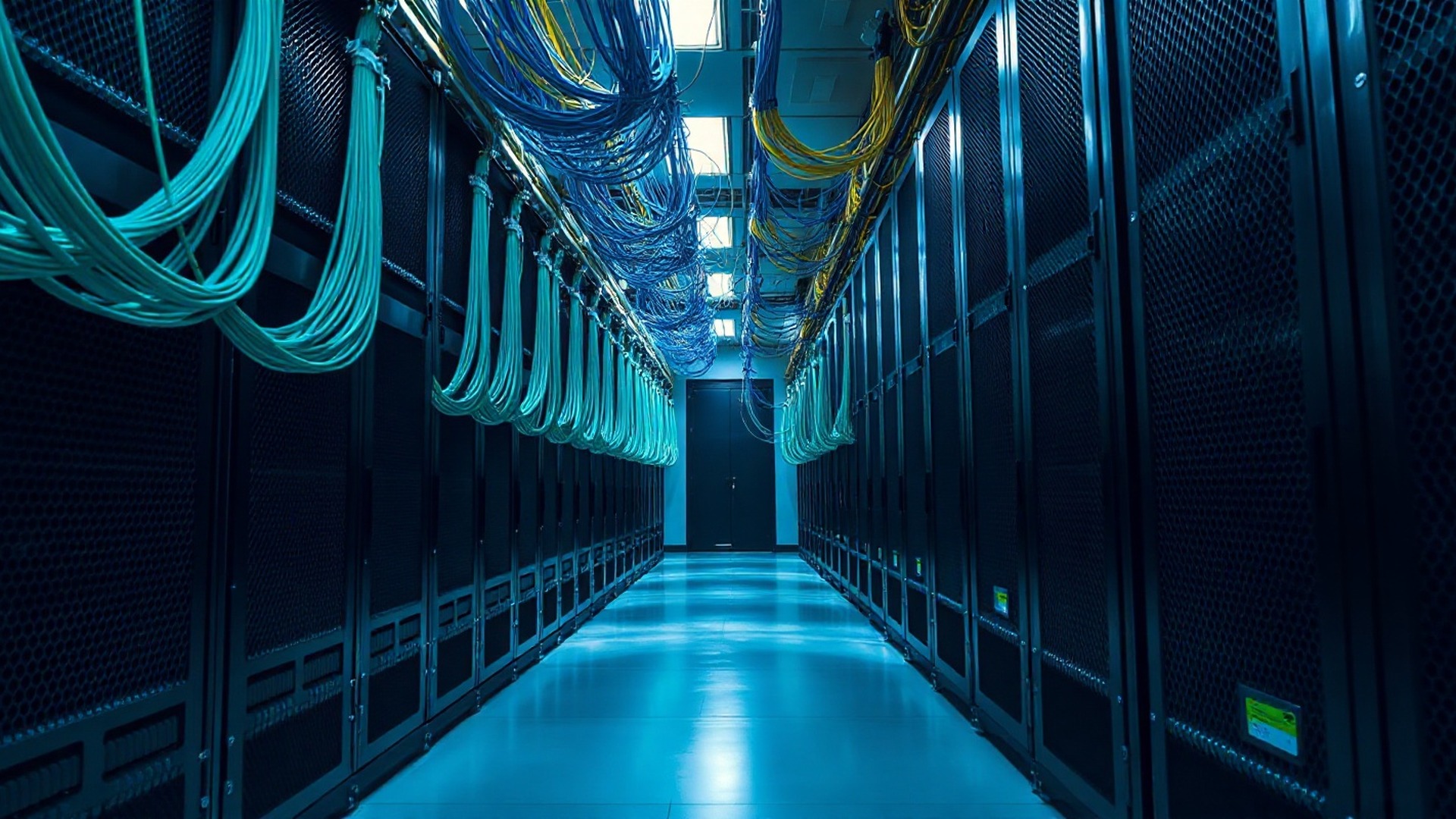

The Street hates capex with a visceral, almost spiritual intensity. And right now, $AMZN is committing what looks like financial self-harm — a 2026 capex plan of roughly $200 billion, more than the GDP of Iceland, most of it funneled into AI data centers that don’t finish turning a profit for years. The stock has ground out a +3.1% YTD while the Nasdaq flexes, analyst price targets drift toward $312.99, and the financial press keeps writing the slow-motion margin compression story. So here’s the part the crowd isn’t reading.
AWS just posted $37.6 billion in Q1 2026 revenue, up 28% year-over-year. That’s not just growth — it’s the fastest acceleration in 15 quarters on a 28%-market-share platform that still runs 38 regions and 120 availability zones. The backlog hit $364 billion, up 40% year-over-year, which is the single most underappreciated number on Amazon’s income statement. When enterprises lock in a quarter-trillion-dollar pipe of future spend, the “AI capex is a money pit” thesis has to at least bend.
And the margin math is actually working. AWS operating income was $14.2 billion in Q1, a 37.7% margin, even as the company spent $131.8 billion on capex in FY25. Free cash flow compressed from $32 billion to $7.7 billion, which looks ugly until you remember that the AI infrastructure build is the very thing that’s producing 170% quarter-over-quarter Bedrock spend growth and an AI-specific revenue run rate above $15 billion. The machine is expensive, but it’s printing.
Then there’s the Trainium angle, which is the real structural story nobody on fintwit is talking about. Amazon’s custom Trainium2 and Trainium3 silicon delivers 30-40% better price-performance than off-the-shelf GPUs, and Trainium commitments have already topped $225 billion in customer pledges. Graviton4 instances run 40% faster than equivalent x86, and 98% of the top 1,000 EC2 customers are on custom silicon already. Translation: Amazon is quietly building a moat that makes it less dependent on Nvidia than any other hyperscaler, and that cost structure compounds every single quarter while the GPU buyers eat full list price.
The Anthropic commitment alone is north of $100 billion. That is not a line item — that is a strategic alliance that effectively makes Amazon the plumbing layer for the most valuable private AI company on earth. Combined Big Tech AI capex in 2026 runs about $700 billion industry-wide, and Amazon is taking the largest share while simultaneously running the cheapest inference stack. That is not a paradox. That is a monopoly in the making.
Now the part literally nobody is pricing in. Amazon Leo — the satellite broadband constellation formerly known as Project Kuiper — has launched 367 satellites toward a planned 3,236, and the FCC deadline has been waived. The rebrand from “Project” to “Amazon Leo” in November 2025 wasn’t cosmetic; it was operational. This is a direct shot at Starlink’s $11.4 billion revenue stream, which is already running at $4.4 billion in operating income and 5 million-plus subscribers with a four-year head start. Pre-revenue doesn’t mean pre-valuable, and Amazon has a habit of entering second and winning.
Starlink is the comps sheet the analysts refuse to open. At its run-rate multiples, a successful Amazon Leo is a $50 billion to $100 billion standalone asset sitting inside a company the market currently values like a slightly-depressed retailer. That is a free call option embedded in a $2.56 trillion market cap, and it’s marked to zero by consensus.
Zoom out for a second. Price-to-forward-earnings of 24.1x on a business that just grew revenue to a $742.8 billion TTM run rate, doubled net income to $77.7 billion in two years, and is accelerating its flagship cloud platform after years of share loss to Azure and GCP. Operating margin has climbed to 11.2% from negative territory in FY22. The EPS is $7.17 and still climbing into the $9-plus range next year. Analysts are unanimous — STRONG BUY, every single one — with a $312.99 target that represents +31.3% upside from yesterday’s $238.34 close.
The crowd sees $200 billion of capex and panics. The patient reader sees a $364 billion backlog, a custom-silicon cost moat that the rest of the industry is three years from replicating, a Bedrock platform locking in AI spend before competitors ship v1, and a satellite constellation that could independently justify a re-rate. $AMZN at 24x forward, with AWS accelerating, Trainium printing margin, and Kuiper still unmodeled, is not a crowded trade. It is the opposite. And that’s usually the best kind.
Disclosure: The Signal holds no position in AMZN. Positions may change. This is not financial advice.