Google is fighting the AI war on every front at once — and it is spending more money than any company in history to make sure it does not lose.
At Google I/O 2026, the company unveiled a sprawling AI strategy that touches nearly every product it makes. Gemini models now power Search, Cloud, YouTube, Android, and a growing suite of enterprise agentic tools. Custom TPU silicon drives the training infrastructure behind it all. And Waymo has quietly become the most valuable autonomous vehicle company on Earth, operating more than half a million paid rides every week. The question for investors is whether this breadth is a formidable moat or a dangerous distraction.
The market is leaning bullish for now. Alphabet shares closed at $366.46 on July 6, 2026, up 16.4% year to date from $314.74 at the start of the year. The company now commands a $4.47 trillion market capitalization, placing it among the three most valuable publicly traded companies in the world. With a trailing P/E of 28.0x and a forward P/E of 25.2x, Google actually trades at a discount to several mega-cap peers — a valuation gap that could close meaningfully if the AI thesis continues to deliver results.
The most compelling evidence for the bull case lives inside Google Cloud. In the first quarter of 2026, Cloud revenue hit $20.0 billion, an eye-popping 63% increase year over year. The segment generated an operating margin of 32.9%, a dramatic improvement from single-digit margins just a few quarters ago. Even more telling is the backlog: $462 billion in committed enterprise contracts, representing years of locked-in spending on Google's AI infrastructure, data analytics, and agentic workflow tools. That backlog is a forward-looking signal that enterprises are not just experimenting with generative AI — they are placing long-term strategic bets on Google's stack.
The core business remains a formidable cash engine. Search & Other revenue reached $60.4 billion in Q1, up 19% year over year, suggesting that Gemini-infused search results are monetizing without cannibalizing the core ad business. YouTube Ads contributed $9.9 billion, up 11%, fueled by AI-powered ad targeting and the continued rise of YouTube TV and Shorts. Across the trailing twelve months, Alphabet generated $422.5 billion in total revenue and $160.2 billion in net income, though the bottom line includes a $36.9 billion one-time equity gain that makes operating income a cleaner measure of profitability. On that front, operating margin stands at a healthy 36.1%, and trailing free cash flow comes in at $64.1 billion.
| Metric | Value |
|---|---|
| Share Price (July 6, 2026) | $366.46 |
| Market Capitalization | $4.47T |
| Year-to-Date Return | +16.4% |
| Trailing P / E Ratio | 28.0x |
| Forward P / E Ratio | 25.2x |
| Q1 2026 Cloud Revenue | $20.0B (+63% YoY) |
| Q1 2026 Search & Other Revenue | $60.4B (+19% YoY) |
| TTM Free Cash Flow | $64.1B |
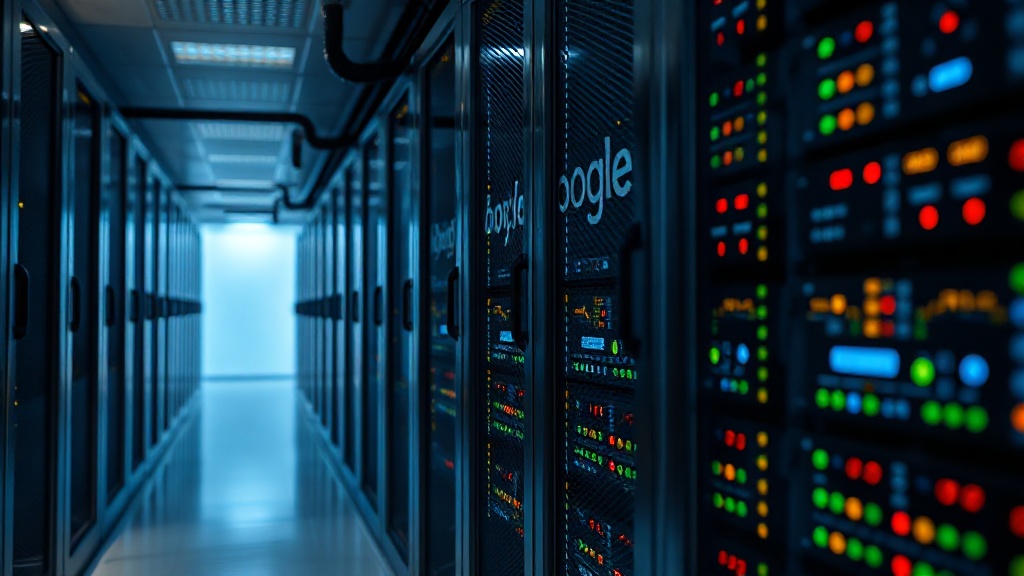
The sheer scale of Google's infrastructure bet is difficult to overstate. Management has guided for $180 billion to $190 billion in capital expenditures in 2026 — the largest single-year CapEx commitment in the history of the technology industry. This money is flowing into new data centers, custom TPU clusters, subsea cables, and fiber networks: the physical backbone of an AI-first world. It is a bet that demand will justify supply, and so far Cloud's $462 billion backlog suggests the demand side of the equation is holding up.
Waymo represents a different but equally consequential upside vector. The autonomous driving unit now operates more than 500,000 paid rides per week across ten major U.S. cities, and a $16 billion external funding round in February 2026 valued the business at $126 billion. Waymo sits inside Alphabet's Other Bets segment for now, but its standalone valuation already exceeds the market caps of most S&P 500 companies. If Alphabet ever chooses to spin Waymo out or take it public, the value unlock for shareholders could be enormous.
No investment thesis is without risk, and Google faces serious headwinds. On July 2, 2026, the European Court of Justice upheld a €4.1 billion antitrust fine against Google related to Android's shopping and search practices — an eight-year legal battle that ended in a definitive loss. Regulatory pressure remains a persistent overhang across Google's core businesses, from Search dominance to ad tech market share to app store commissions. Any forced restructuring of these businesses could meaningfully alter the economics of the cash cow segments.
Wall Street is not deterred by the noise. The analyst consensus on GOOGL stands at Strong Buy, with a mean price target of approximately $432 — representing roughly 20% upside from current levels. Google is executing on every front of the AI revolution, from custom silicon to generative search to autonomous transportation. The bull case holds that this breadth is an unbreachable moat built on data, infrastructure, and talent that no single competitor can match. The bear case warns that fighting a multi-front war risks spreading resources and management attention too thin. For now, the numbers — the cloud backlog, the cash flow, the Waymo valuation — favor the bulls.
Disclosure: The Signal holds no position in GOOGL. Positions may change. This is not financial advice.