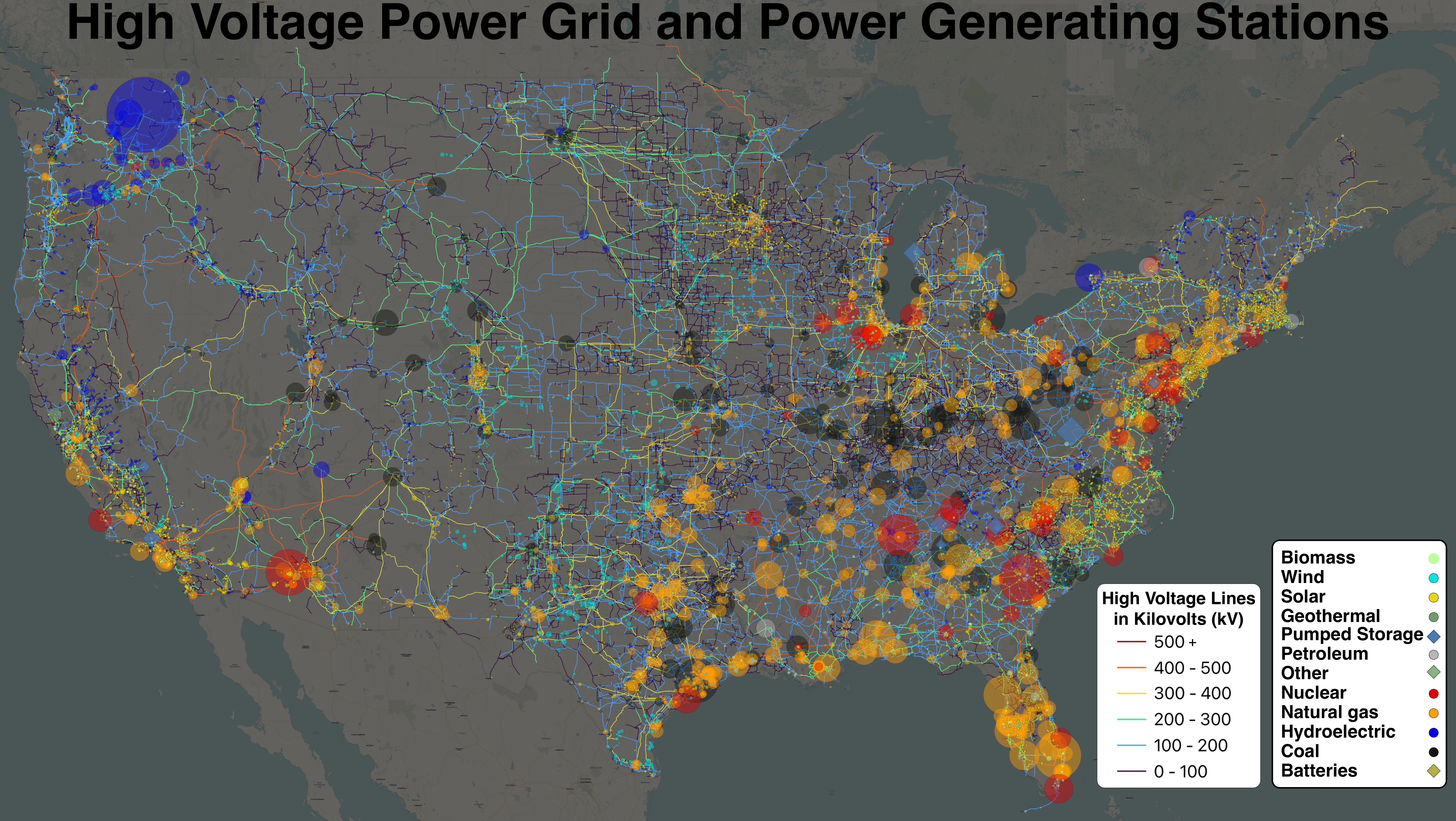
Here's the thing about gold rushes: the people who made the real money weren't the ones swinging pickaxes. They were the ones selling shovels, building railroads, and running the saloons. Right now, the AI gold rush has minted more semiconductor millionaires than any boom in history — but the smart money is already rotating into the next layer of the trade. The layer most retail investors haven't even thought about yet.
The power grid.
AI models don't run on hype. They run on electricity. A single ChatGPT query burns roughly ten times the energy of a Google search. A single training run for a frontier model can consume as much electricity as a hundred U.S. households use in a year. And every hyperscaler — Microsoft, Amazon, Google, Meta — has committed hundreds of billions to AI data centers that need to be powered, cooled, and connected to the grid. Not someday. Right now.
The Defiance AI & Power Infrastructure ETF (AIPO) is the only fund on the market that isolates this exact thesis: AI will only scale as fast as the infrastructure that powers it. And the recent tech selloff just handed investors a ticket at a price that makes sense.
What's Actually Inside AIPO
This isn't a broad utility fund with an AI sticker slapped on. AIPO's top holdings read like a who's-who of the companies that physically make the AI buildout possible:
- Quanta Services (PWR) — the largest specialty contractor in North America. When a hyperscaler needs to connect a gigawatt-scale data center to the grid, Quanta is the company that strings the transmission lines, builds the substations, and lays the underground cable. They don't care whose chips are inside the building.
- Eaton Corporation (ETN) — makes the transformers, switchgear, and power distribution equipment that every data center needs. Eaton's backlog for large power equipment stretches into years, not months. That's pricing power.
- GE Vernova (GEV) — the GE spin-off focused entirely on electrification and power generation. Gas turbines, grid stabilization, and the kind of large-scale generation capacity that data center campuses can't get from rooftop solar.
- Constellation Energy (CEG) — the largest nuclear operator in the United States. Microsoft already signed a deal to restart Three Mile Island to power its AI data centers. Constellation owns the fleet that every hyperscaler is lining up to buy power from.
- Vertiv Holdings (VRT) — data center cooling and power management. Without Vertiv's thermal management systems, a rack of H100s melts itself in about thirty seconds. Not optional.
- Bloom Energy (BE) — on-site fuel cell power generation that data centers use for backup and supplemental power. When the grid can't deliver, Bloom steps in.
- Cameco (CCJ) — the uranium giant. Every nuclear reactor that powers an AI data center needs fuel, and Cameco is one of the world's largest producers. The nuclear renaissance isn't a meme — it's showing up in ETF holdings.
And yes, AIPO also holds the chip names you'd expect — Broadcom (AVGO), Nvidia (NVDA), and AMD — so you're not giving up AI exposure. You're just layering the actual infrastructure underneath it.
Why This Dip Matters
AIPO got swept up in the broader tech selloff driven by Iran strikes and a hot CPI print. When everything red screens, thematic ETFs don't get a pass. But here's what didn't change during the selloff: Microsoft didn't cancel its nuclear deal. Amazon didn't stop building data centers. The hyperscaler capex numbers — the only forward indicator that matters for this trade — didn't drop by a single dollar.
The ETF pulled back to levels that previously acted as support, giving back the froth from its spring rally without breaking structure. That's not a breakdown. That's a reset.
The Catch
AIPO is a thematic ETF, which means it's concentrated and will move more than a broad market fund on any given day. If AI capex suddenly collapses — if the hyperscalers decide they've built enough and the spending cycle peaks — the power infrastructure thesis cools with it. This is a bet on AI scaling further, not a defensive hedge.
But if you believe the buildout has years left — and the hyperscalers' own guidance says it does — then the power grid is the bottleneck that turns into the profit center. Everyone's fighting over the chips. AIPO owns the plug. And the plug gets paid either way.