RTX just smoked the quarter — $2.26 a share against $1.78 expected — and raised its full-year outlook for the second straight quarter. The stock shrugged. Because the earnings weren’t the story. The order book was: Raytheon has quietly converted the Pentagon’s February framework agreements into roughly $70 billion of binding missile contracts, and the backlog now stands at a record $340 billion.
Wall Street spent October cutting RTX. Bernstein trimmed its target to $214 in mid-October. TD Cowen cut to $225. Deutsche Bank downgraded the stock to Hold at $208, and Bernstein cited a lower multiple for the whole defense sector.
The Pentagon spent the same stretch doing the opposite: signing.
The numbers that matter
| Adjusted EPS (Q3) | $2.26 vs. $1.78 consensus |
| Revenue (Q3) | $24.97B, +11% year over year |
| FY26 EPS guidance | $7.65–$7.75, raised from $7.10–$7.25 |
| FY26 sales guidance | $97.0–$97.5B, raised from $95–$96B |
| Total backlog | $340B — a record ($164B defense / $176B commercial) |
| New awards (Q3) | More than $81B |
| Raytheon book-to-bill | 6.54 |
| Free cash flow (Q3) | $2.1B, down from $4.0B a year earlier |
Frameworks became contracts
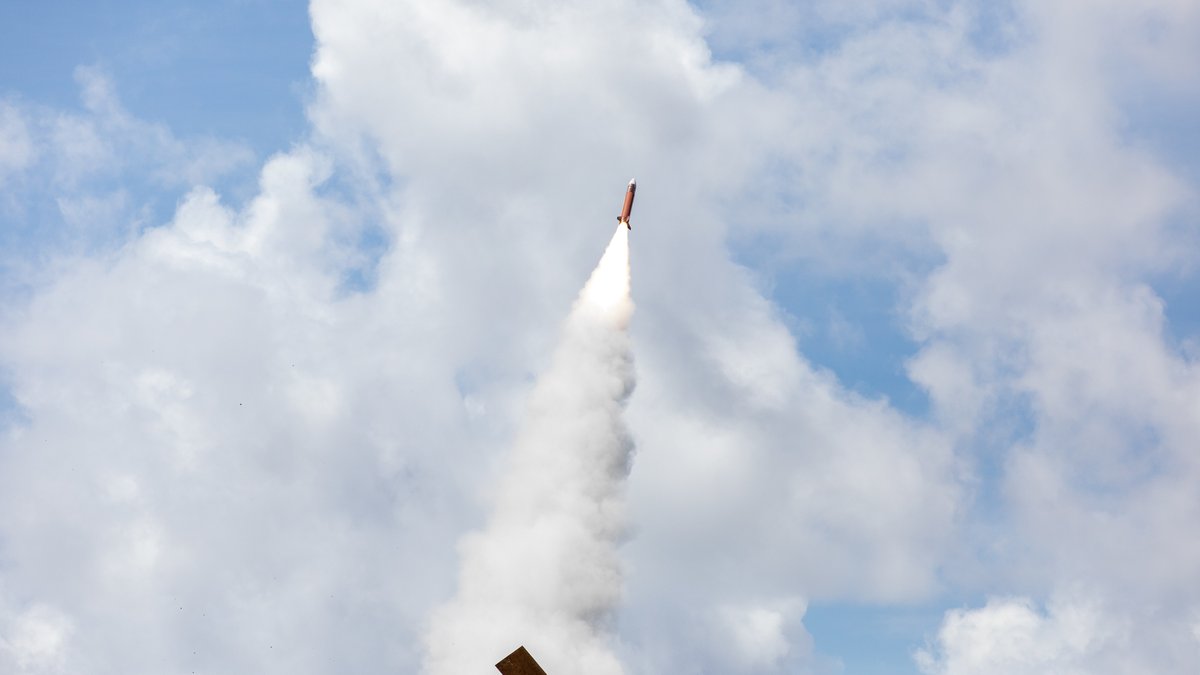
In February, Raytheon signed five framework agreements with the Department of War to surge production of the missiles the U.S. has been firing faster than it can replace: Tomahawk cruise missiles, AMRAAM air-to-air missiles, SM-3 Block IB and Block IIA interceptors, and the SM-6. Frameworks are intentions. They are not money.
On Tuesday’s earnings call, CEO Chris Calio confirmed four of them have now converted into binding multi-year production contracts — approximately $23 billion for Tomahawk, more than $14 billion for AMRAAM, plus SM-6 and SM-3 IB awards — nearly $70 billion in combined value. His words: they give Raytheon “almost a decade of demand visibility.”
The conversion is already visible in the bookings. Raytheon took in $52.3 billion of orders in the third quarter alone — a 6.54 book-to-bill ratio, meaning it booked six and a half dollars of new work for every dollar it shipped. The Navy’s $22.9 billion, seven-year Tomahawk contract in August and the Pentagon’s $20.7 billion AMRAAM production award in September are what this pipeline looks like when it lands.
Total backlog: $340 billion, up from $289 billion just one quarter ago.
The production moonshot
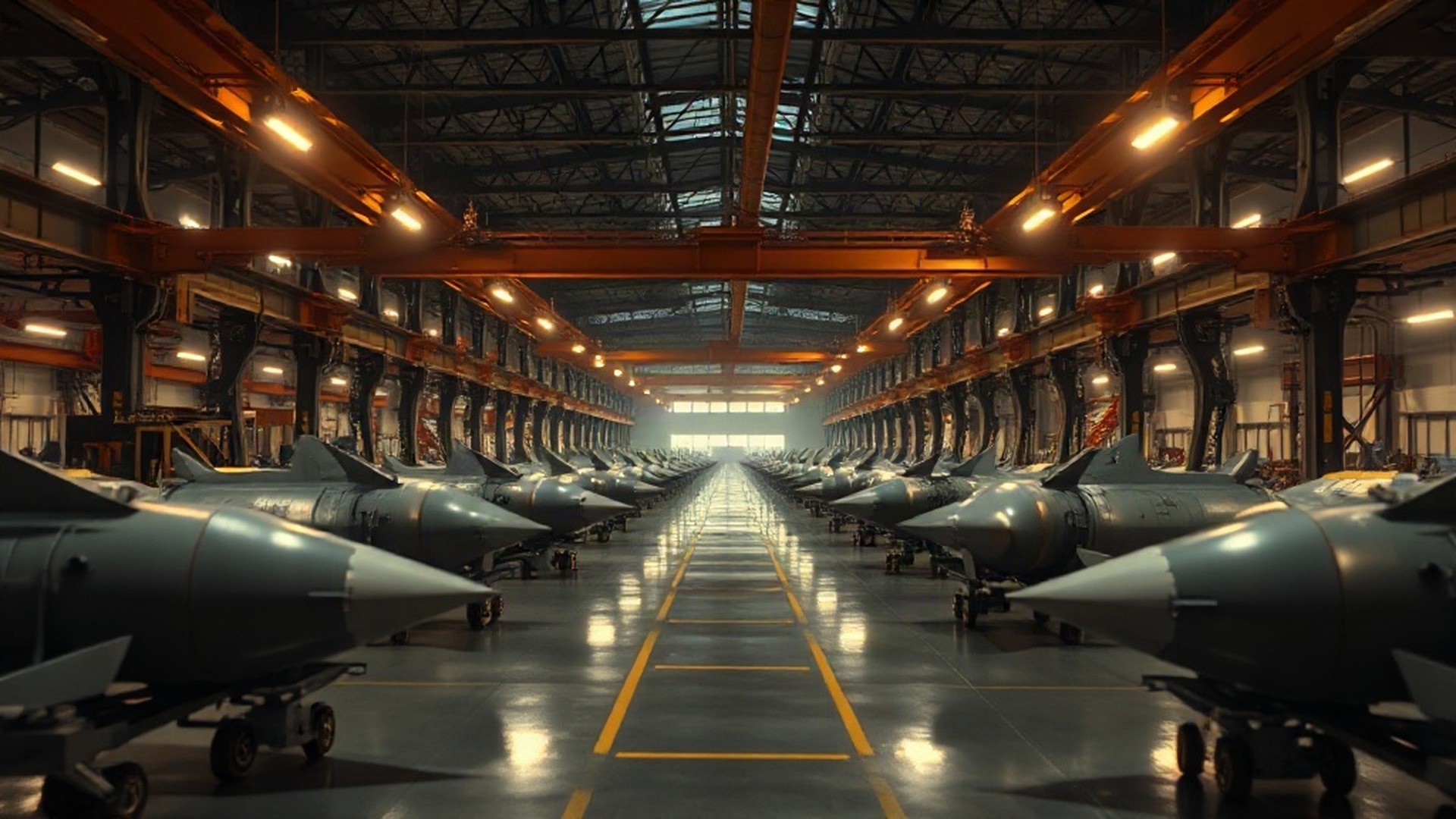
The contracts only matter if RTX can build the missiles, and the production targets are not incremental. Under the frameworks, annual Tomahawk output rises to more than 1,000 missiles a year. AMRAAM goes to at least 1,900 a year. SM-6 climbs past 500. Across the portfolio, RTX is pushing production to two to four times existing rates, at plants in Tucson, Huntsville, and Andover.
This is the part the target cuts missed. The agreements were structured with what RTX calls a collaborative funding approach — the government helps fund the capacity build-out, specifically so the ramp doesn’t crush RTX’s free cash flow up front. The Pentagon isn’t just ordering missiles. It’s co-investing in the factories, because the stockpile math demanded it.
A decade of contracted demand, a customer funding your capex, and a backlog equal to roughly three and a half years of revenue. That is not a normal defense prime profile. That is a munitions utility.
Why the stock yawned anyway
Now the honest part, because a $340 billion backlog is a promise, not a bank transfer.
First, $0.25 of the quarter’s adjusted EPS came from IEEPA cost recovery — tariff-related money coming back, about $300 million collected in Q3 with roughly $50 million more expected in Q4. Real cash, but it is not missile margin, and it flattered both the beat and the guidance raise.
Second, Pratt & Whitney absorbed a $363 million charge tied to a customer bankruptcy. The commercial engine business that funds the defense story still carries airline credit risk.
Third — and this is the one that matters — third-quarter free cash flow was $2.1 billion, down from $4.0 billion a year earlier. The full-year FCF guide went up to $9.0–$9.2 billion, but the quarter itself showed the strain of building ahead of demand. Backlog converts to revenue on a schedule. It converts to cash on a longer one.
And fourth: multiplying missile production two to four times is an execution promise, not a result. Every defense program in history has a chart that looked like this on signing day. The analysts who cut targets in October weren’t wrong about the valuation — RTX trades at a premium multiple for the sector. They were arguably wrong about what they were valuing.
What to watch
- Q4 cash delivery. The raised $9.0–$9.2B free cash flow guide has to land. This is the conversion test, and it’s the whole debate.
- Raytheon margins as volume ramps. High-rate missile production should be more profitable than development work — if the factories execute.
- The fifth framework. SM-3 Block IIA is the remaining piece of the February set. Watch for its conversion into a funded contract.
- FY27 framing. Management already teased another year of top- and bottom-line growth in 2027. If backlog keeps compounding at this rate, the “premium multiple” argument gets harder to make.
The bottom line
Two things happened this fall. Analysts marked RTX down for being expensive, and the United States government signed contracts that fill its missile factories into the mid-2030s. Both can be true. But only one of them is a ten-year fact.
The trade on RTX is no longer “will demand show up?” Demand showed up, in writing, at $340 billion and counting. The trade now is whether RTX can turn the biggest order book in its history into cash before the market’s patience runs out. Tuesday’s quarter said the orders are real. The cash flow statement gets the next word.