Peter Beck stood in front of a crowd earlier this year and said the thing most CEOs in his position wouldn't dare say. Neutron is on track for late 2026. Not "we're working towards it." Not "we're making progress." On track. No hedging, no weasel words, just a date.
For a company that started by launching a two-ton rocket called Electron off a dock in New Zealand, that's a statement with serious teeth. Rocket Lab (RKLB) just closed Q1 2026 with $200.3 million in quarterly revenue — the first time the company ever cracked a triple-digit quarter. The stock's sitting around $100, market cap north of $62 billion, and analyst consensus still says Buy with a mean target of $114.
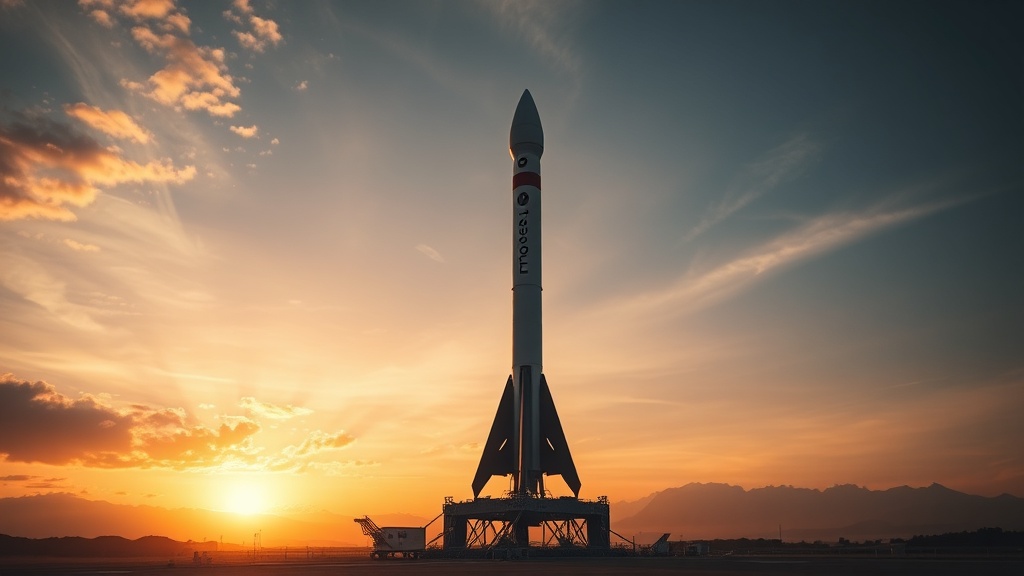
But here's the thing nobody's really talking about. The revenue growth, the cash balance, the contracts — all of that is great. What actually matters is what lands on the pad in about five months. A reusable medium-lift rocket that could completely rewrite the commercial launch industry's competitive map.
Neutron isn't just another rocket. It's the vehicle that turns Rocket Lab from "that Electron company" into a legitimate SpaceX alternative. The design targets 13 metric tons to low Earth orbit in its partially reusable configuration. That puts it squarely in the medium-lift class, right next to where Falcon 9 has dominated for nearly a decade.
And here's where it gets interesting. The medium-lift competition is thinning out fast. Firefly's MLV program is still uncertain — the company's struggling with capital and execution timelines. Relativity Terran R pivoted away from its reusable approach entirely, betting on an expendable design that needs to prove itself from scratch. ULA's Vulcan is still ramping and costs north of $150 million per flight without any reusable stage to amortize over multiple launches.
| Metric | Value |
|---|---|
| Revenue TTM | $679.6M |
| Revenue Growth YoY | +63.5% |
| Market Cap | $62.77B |
| Cash (Net) | $1.2B |
| 52-Week Range | $35.28 – $151.00 |
| YTD Return | +32.2% |
So when Neutron debuts, it won't be entering a crowded arena. It'll be stepping into a vacuum — a medium-lift slot with almost nobody shooting for the same window. That's not a small advantage. That's a timing edge Rocket Lab didn't have to fight for. It just arrived.
The other piece that's flying under the radar: Rocket Lab quietly locked in its biggest launch deal ever — a confidential customer who booked multiple Neutron and Electron launches. Details are scarce, but when management says "biggest in company history" about a firm contract, that's revenue with a signature on it. Not letters of intent. Not preliminary discussions. A binding commitment to fly. With Neutron.
Let's talk about the money. Rocket Lab's got $1.2 billion in cash against just $138.7 million in debt. That's net cash positive — not something you see often in the space industry, where most companies are burning through investor capital while they race toward a first flight that's perpetually two years away. Rocket Lab's balance sheet buys it the runway to actually finish Neutron without a dilutive capital raise hanging over the stock.
That said, this isn't a profits story yet. Operating margin sits at negative 22.4%. Profit margin even worse at negative 26.9%. The company's spending aggressively on Neutron development, which is exactly what you'd want from management in this phase. Every dollar of capital's going toward building a rocket — not padding margins or buying back stock. It's the right allocation. Just not a near-term catalyst for bottom-line investors.
The stock's run 32% year-to-date and nearly tripled off its 52-week low of $35.28. Short interest's only at 5.9%, which means the bears have basically given up. Analysts are broadly bullish, and the consensus target of $114 implies another 13% upside from current levels. Some street models have it higher. The bull case runs well into the $150s.
But the real question isn't what Rocket Lab's stock does before Neutron launches. It's what happens after. Because if Peter Beck delivers on the date he's put out — and everything the company's done in the last two years suggests he will — Rocket Lab won't be a small-sat boutique anymore. It'll be a two-rocket company with a fully integrated space business, a balance sheet that doesn't need your money, and a medium-lift launch vehicle entering a market with almost no one else competing for it.
That's not a speculative bet. That's a timeline. And the clock's ticking on Q4.
Disclosure: The Signal holds no position in RKLB. Positions may change. This is not financial advice.