Northrop Grumman has dropped 31% from its all-time high. That's $536.49 a share, down from $774. The market is treating it like a company that's lost its way. Meanwhile, the backlog just hit $95.6 billion — a company record, enough to cover nearly two and a half years of sales. Something doesn't add up.
Let's be direct about it: NOC is the cheapest defense prime in the sector by trailing P/E at 16.7x. Lockheed Martin trades at 25.3x. RTX at 37.1x. General Dynamics at 23.6x. That's not a discount — that's a chasm. And the gap only gets more absurd when you look at what's sitting in that backlog.
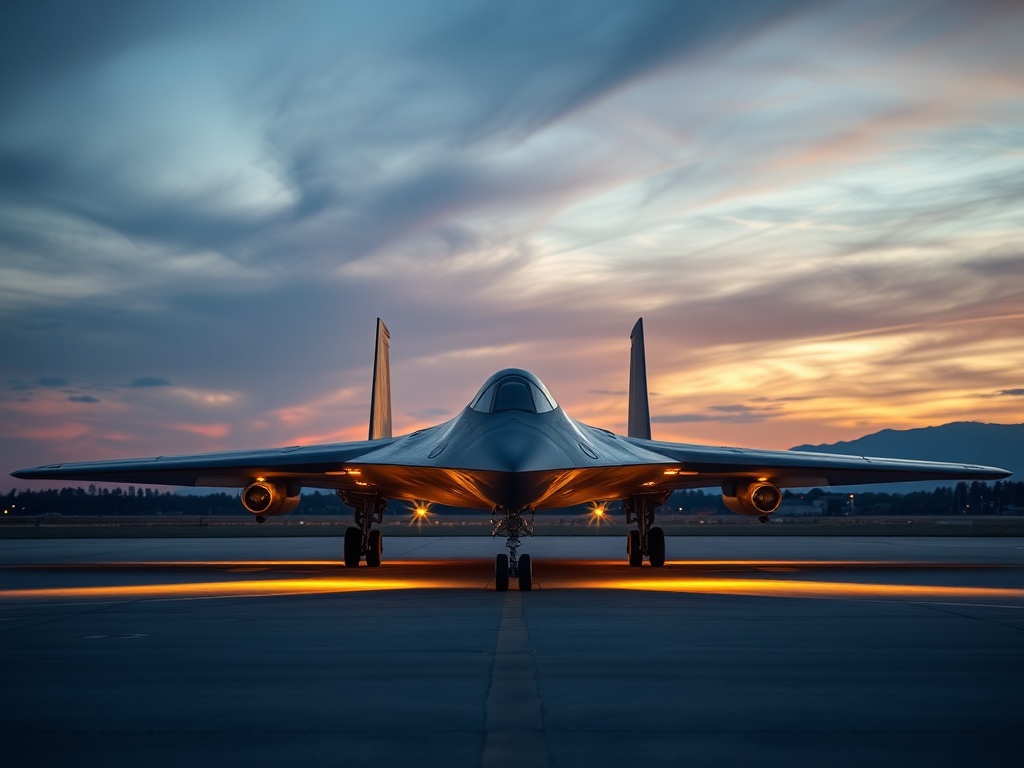
The B-21 Raider is one of them. Northrop is the sole prime contractor on America's next-generation stealth bomber, a program with no competition, no alternative vendor, and no exit clause for the Air Force. First flight happened November 2023. They're moving into low-rate initial production right now. In February, Northrop locked in a $4.5 billion expansion deal. Operational delivery target is 2027. There is no Plan B for the B-21 — Northrop is Plan A, B, and C.
The other franchise: Sentinel ICBM. Northrop is replacing all 400 Minuteman III missiles for the U.S. Air Force under a $140.9 billion program. Yes, Sentinel has gone through a Nunn-McCurdy breach, and yes, restructuring is underway. But here's the thing — Northrop is still the sole provider. The Air Force isn't going to cancel the land leg of the nuclear triad. They're going to restructure the contract, pay more, and keep moving. That's how these programs work. The question isn't whether Sentinel gets built — it's how much Northrop gets paid to build it.
Together, the B-21 and Sentinel represent two of the largest sole-source defense franchises in American history. No other defense contractor can claim that combination. Lockheed has the F-35. GD has submarines. But nobody has both the strategic bomber and the ICBM. That's a structural moat that doesn't show up on an income statement — but it absolutely shows up in the backlog.
And there's a lot more in that backlog. Northrop's space division has contracts for over 150 satellites with the Space Development Agency, builds the GEM 63XL boosters for United Launch Alliance, and operates the Cygnus spacecraft that keeps the International Space Station supplied. International demand is accelerating too — on July 10, just days ago, NATO finalized a Triton drone deal that extends Northrop's high-altitude surveillance reach across the alliance. The Integrated Battle Command System (IBCS) has formal requests from 20 countries. These aren't niche programs — they're global infrastructure.
The financials back up the story. FY2025 revenue hit $41.95 billion, net income came in at $4.18 billion. Free cash flow hit $3.31 billion, up 26% year over year. Operating margin sits at 11.7%, net margin at 10.8%. And Q1 2026 was a monster: $9.88 billion in sales, up 4% year over year, with EPS of $6.14 — an 85% jump from the same quarter last year. The margin expansion is real. The cash flow trajectory is real.
So why is the stock down 31%? Mostly Sentinel. The Nunn-McCurdy breach spooked the market, and the Street hates uncertainty on fixed-price development contracts. But the market is treating Sentinel like a binary risk when it's really a negotiation risk. The program is too strategically important to fail. The restructuring will likely result in higher costs, higher payments, and a longer timeline — none of which destroy the long-term value of the franchise. If anything, it reinforces the moat. Who else is going to step in and build 400 ICBMs from scratch? Nobody.
At 16.7x trailing earnings with a $95.6 billion backlog, 26% FCF growth, sole-source control over two national security mega-programs, and analyst consensus at Buy with a $670 target implying 25% upside — NOC is the kind of mispricing that doesn't last forever. Q2 2026 earnings land on July 21, just one week from today. If the Sentinel restructuring narrative shows progress, or if the B-21 LRIP timeline gets any clarification, this stock could re-rate fast.
The market is looking at the headline risk and ignoring the structural demand. That's a mistake. And when the market makes mistakes, that's where the opportunity is.
Disclosure: The Signal holds no position in NOC. Positions may change. This is not financial advice.