Let's be real for a second. When was the last time you saw a company with a $100 billion contracted backlog, 84.6% gross margins, and a near-monopoly on a technology that every hyperscaler on earth is fighting over — trading at six times earnings?
Never. That's when. And yet here we are with Micron Technology.
The market has this weird reflex when it comes to memory stocks. Every earnings season, the same narrative bubble rises: it's cyclical, peak margins are in, the DRAM cycle is about to turn. It's been the conventional wisdom for so long that traders barely think twice before fading any memory rally.
But this cycle is different. And the difference is spelled H-B-M.
High Bandwidth Memory isn't your grandfather's DRAM. It's the bleeding-edge vertical stack of memory dies that powers every single AI accelerator shipping right now — NVIDIA's Blackwell, AMD's MI400, the whole ecosystem. And Micron? They're the only US-based manufacturer fully certified and ramping HBM3E production at scale.
Yes, SK Hynix and Samsung are in the game too. Both are certified, both are ramping. But Micron is the only game on American soil, and in a geopolitical environment where supply chain resilience is suddenly everyone's priority, that counts for a lot more than the spreadsheets give it credit for. When the US government starts talking about memory independence, Micron's the only conversation in town.
The numbers are genuinely absurd. Micron is on track to do roughly $90 billion in revenue this year on a trailing basis. Gross margins are sitting at 84.6% — numbers that look more like a software company than a memory manufacturer. The backlog of contracted orders has blown past $100 billion. Think about that: over a hundred billion dollars of product that customers have already committed to buy, at agreed-upon prices, in many cases years in advance.
That's not a cyclical snapshot. That's a structural shift.
And the forward P/E reflects none of it. A little over six times estimated earnings. Six. You can find public utilities with lower multiples than that. Regional banks trade richer than this. The market is pricing Micron like earnings are about to fall off a cliff — the standard "memory is cyclical" reflex that's burned bears for decades.
But this time, the floor is different. AI workloads consume vastly more memory than traditional computing. A single Blackwell GPU rack needs multiple terabytes of HBM. Multiply that by every hyperscaler — Amazon, Microsoft, Google, Meta — all building out clusters of 100,000 GPUs and you start to understand why the backlog is $100 billion and growing, not shrinking.
BofA recently called Micron their highest-conviction buy — and they're not alone. The Anthropic partnership was another signal that AI-native companies see memory as a strategic bottleneck worth locking down years in advance. The Q3 earnings call was essentially a victory lap: record backlog, raised guidance, management sounding like they can't make HBM fast enough.
So what's the bear case? The same one it's always been: that the memory cycle turns, supply floods the market, and margins collapse. It's happened before — in 2018, in 2022, a dozen times before that. The memory industry has scars, and the market prices them in every single day. If you've been trading semiconductors for more than a few years, you've watched this movie before.
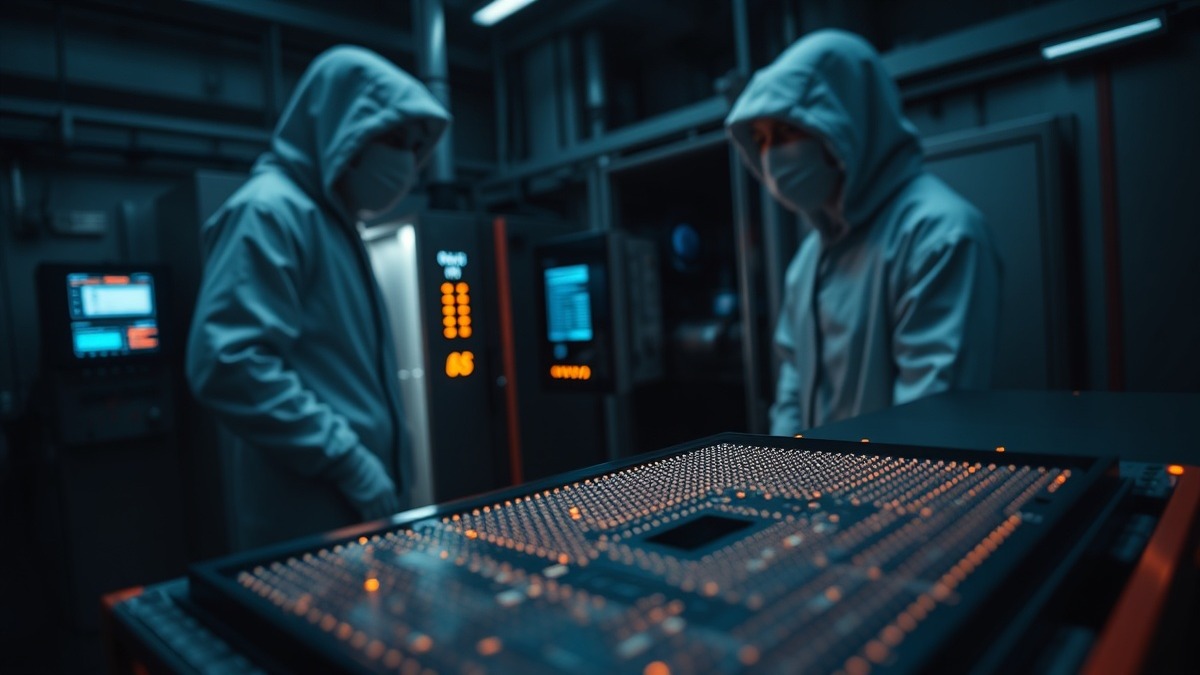
But HBM isn't commodity DRAM. The manufacturing process is orders of magnitude more complex — think stacking dozens of individual memory dies vertically, with through-silicon vias and microbumps that require near-perfect yields. The certification cycles run 12 to 18 months. You can't just flip a switch and add supply. And with AI capex showing no signs of slowing — we're talking a trillion dollars in infrastructure spending over the next three years — the demand side of the equation looks a lot more durable than anything the memory industry has ever seen.
The risk here isn't that Micron is overvalued. The risk is that you wait for the pullback that never comes, watching the stock double from these levels while you're still arguing about cycle theory.
Forward P/E of 6.4. A hundred billion in backlog. The AI trade of the decade happening inside a memory company the market refuses to reprice. Make of that what you will.
Disclosure: The Signal holds no position in MU. Positions may change. This is not financial advice.