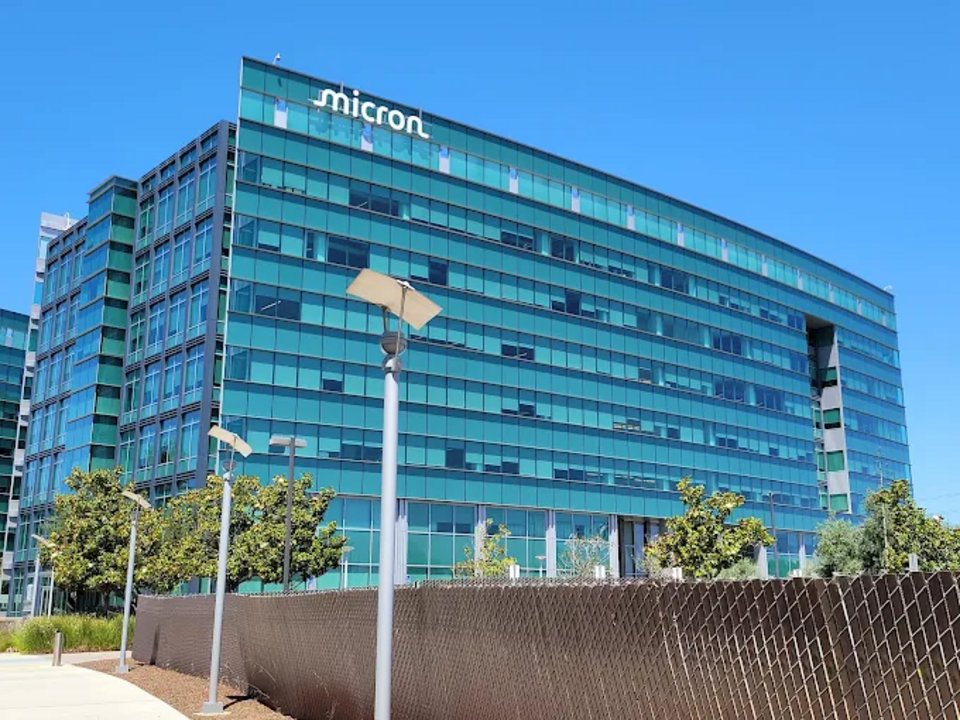
There are stock market rallies, and then there's what Micron Technology just pulled off. The Boise, Idaho-based memory chip maker — long dismissed as a cyclical commodity play that investors bought at the bottom and sold at the top — crossed the $1 trillion market capitalization threshold for the first time in its 47-year history. In just 48 trading days, Micron doubled its market cap, producing a 745% return over the trailing twelve months. For context, that means a $10,000 bet on Micron one year ago would be worth roughly $84,500 today. Not bad for a company that makes memory chips.
The catalyst wasn't subtle. It was artificial intelligence — specifically, the insatiable demand for High Bandwidth Memory, or HBM, the specialized DRAM that sits directly alongside NVIDIA's GPUs and determines how fast AI models can process data. Every NVIDIA H200 and B200 chip requires HBM stacked alongside it in a 2.5D package. Every hyperscaler pouring billions into AI infrastructure needs it. And there are effectively only three companies in the world that can manufacture HBM at scale: SK Hynix, Samsung, and Micron. When demand explodes and supply is concentrated in an oligopoly of three, prices don't just rise — they stay elevated for years.
The 48-Day Sprint Nobody Predicted
The numbers tell a story that even the most bullish analysts didn't see coming. Micron's stock touched a 52-week high of $1,089.29 — a level that would have seemed absurd when shares were changing hands at $103.38 just twelve months ago. Even after a modest pullback to roughly $922, the year-to-date gain sits at approximately 122%, with the stock starting 2026 near $415 before the AI memory thesis fully detonated. The 52-week range — $103.38 to $1,089.29 — represents a nearly 10x swing that captures the totality of Micron's transformation from cyclical afterthought to strategic choke point.
What changed? The market finally priced in structural scarcity. HBM isn't a commodity DRAM chip that any fab can crank out. It's an immensely complex product that stacks DRAM dies vertically using through-silicon vias (TSVs), creating a high-bandwidth, low-latency pipeline directly into the GPU's compute engines. The manufacturing yields are low, the equipment is expensive, and the qualification cycles with customers like NVIDIA take years. You can't just flip a switch and make more HBM — which is exactly why the companies that can make it are suddenly worth a trillion dollars.
From Commodity Cyclical to AI's Most Critical Component
For most of its history, Micron was a well-run but brutally cyclical business. Memory chips are interchangeable. When supply exceeded demand — which happened regularly — prices collapsed and earnings evaporated. Investors treated MU stock like a trade, not an investment: buy when memory prices bottomed, sell when they peaked, and never, ever hold through a downturn. That playbook has been torn up and set on fire.
The HBM market has fundamentally different economics. These chips are custom-designed for specific AI accelerators, sold under long-term supply agreements that create multi-year visibility. Customers don't shop around for the cheapest HBM — they qualify a supplier's product and lock in capacity years in advance. Micron's HBM3E product, which entered volume production in early 2024, is now a mainstay of NVIDIA's Hopper and Blackwell platforms. The company's revenue surged to approximately $23.86 billion on the back of AI-driven memory demand — and that number is still climbing.
At COMPUTEX 2026, Micron unveiled its next act: HBM4, the next generation of high-bandwidth memory that promises dramatically higher throughput and lower power consumption. The timing is impeccable. NVIDIA's Blackwell Ultra and Rubin platforms will demand even more memory bandwidth, and HBM4 is purpose-built to feed them. The transition from HBM3E to HBM4 represents another pricing uplift and another moat-widening moment for the three companies capable of producing it.
The Oligopoly: SK Hynix Got There First, Micron Is Catching Up
Micron isn't alone in the trillion-dollar memory club. SK Hynix, the South Korean giant that supplied the majority of early HBM3 volumes to NVIDIA, also crossed the $1 trillion market cap threshold on the same AI memory tailwind. Together with Samsung — still the world's largest memory maker by total revenue but struggling with HBM qualification timelines — these three companies form an oligopoly around the most critical component in the AI infrastructure stack.
The competitive dynamics are fluid and fascinating. SK Hynix held the early lead in HBM3 and captured the bulk of NVIDIA's initial allocations. But Micron has been methodically gaining share, and its HBM3E product is widely regarded as competitive — or superior — on both performance and power efficiency. Samsung, the 800-pound gorilla of memory, has stumbled on HBM qualification, leaving an opening that Micron has exploited with quiet, Idaho-style discipline. The HBM4 ramp, expected to begin in late 2026 and accelerate through 2027, represents the next major market share battleground — and Micron is positioning aggressively.
The Risks That Come With a Trillion-Dollar Price Tag
For all the euphoria, memory is still memory. The industry's cyclical DNA hasn't been edited out of existence — it's been temporarily suppressed by AI demand that feels bottomless. But every memory boom in history has eventually met a reckoning. Micron, SK Hynix, and Samsung are all investing tens of billions in new HBM production capacity, and at some point — maybe 2028, maybe 2029 — supply growth will catch up to demand. The question isn't whether the cycle will turn, but whether investors will see it coming.
The pullback from $1,089 to $922 is a reminder that trillion-dollar valuations aren't permanent fixtures. UBS analyst Timothy Arcuri recently tripled his price target on Micron to $1,625 — implying roughly 76% upside from current levels — but price targets are estimates, not guarantees. Micron reports earnings on June 24, 2026, and that event will either validate the most aggressive bull case or introduce the first cracks in a narrative that has been almost flawless for eighteen months.
Geopolitical risk looms as well. Micron's manufacturing footprint spans Taiwan, Singapore, Japan, and the United States. Any disruption to Asian semiconductor supply chains — whether from trade restrictions, natural disasters, or escalating tensions in the Taiwan Strait — would reverberate through HBM supply and, by extension, the entire AI infrastructure buildout. Concentration risk works both ways.
What Happens After the Confetti Settles
The bull case, as articulated by the Street's most aggressive analysts, is that Micron is still in the early innings of a multi-year AI infrastructure cycle. HBM4 will be more complex, more expensive, and more essential than HBM3E, extending pricing power for memory makers well beyond the current hype cycle. NVIDIA's roadmap — Blackwell Ultra, Rubin, and whatever comes next — shows no signs of slowing down, and every new GPU architecture demands more memory bandwidth, not less. The HBM content per GPU is rising, and so is the price per gigabyte.
The June 24 earnings report is the next major catalyst. Investors will dissect HBM revenue growth, gross margin trajectory, and forward guidance for any sign that AI memory demand is plateauing. A beat-and-raise quarter could send the stock retesting its highs. A miss could expose the fragility beneath the trillion-dollar valuation. With UBS's $1,625 target dangling 76% above current levels, the market has priced in a lot of good news — but perhaps not all of it.
Micron's journey from $103 to $1,089 isn't just a stock market story. It's a story about how artificial intelligence rewired the semiconductor value chain, transforming memory — the boring, commoditized afterthought of computing — into the strategic linchpin of the most important technology trend in a generation. Everyone bought Nvidia. Micron quietly returned 745%. And if the AI buildout has another gear left, that number could look small in hindsight.