IREN owns land and the power lines that reach it. It builds the data centers on top, buys the GPUs, and rents the resulting AI compute by the hour — the subscription model, applied to the scarcest hardware on earth. The subscription price is about to reset, and the tenants already locked in a cheaper plan.
The tenants are not hobbyists. Microsoft signed a five-year deal worth about $9.7 billion, NVIDIA signed one worth about $3.4 billion, and the rest of the book runs through frontier AI labs. IREN began life as a Bitcoin miner, and it is now shutting that business down to point the same land at AI.
| Price LIVE | $42.62 |
| Market Cap | $17.15B |
| Forward P/E | N/A |
| Total Revenue (TTM) | $707.0M |
| 52-Week Low | $28.93 |
| 52-Week High | $76.87 |
| Analyst Consensus | Strong Buy |
| Analyst Target Mean | $79.03 |
Here is what moved the whole sector. Nebius told customers its on-demand GPU prices rise on October 1: H100 up 17%, H200 up 20%, B200 up 19%, B300 up 21%. CPU and memory climb further, and it is the second increase since May. Wall Street read it as hard evidence that AI compute is genuinely scarce, and it re-priced every neocloud on the board.
IREN tells a version of that story with its own numbers, and its evidence is company-disclosed rather than a leaked rate card. Three-year contract pricing is up about 125% since November 2025. Five-year pricing is up about 70%.
The signed deals are the proof. Recent three-year contracts landed above $20 million of revenue per megawatt of IT load, roughly a two-year payback on the GPUs. Live negotiations sit near $25 million per megawatt, and customer prepayments now cover 45% to 55% of the associated GPU capex. Keep those two stories separate: that is IREN's contract pricing, not a list-price change.
It matters to the whole AI trade because the binding constraint is no longer chips alone. It is chips plus grid-connected power. IREN holds a site pipeline of about 5.6 gigawatts across the United States, Canada, Spain and Australia. Its Sweetwater hub in Texas won a conditional base-load allocation in ERCOT's Batch Zero process — a full 2 gigawatts.
Now the inversion. The contracts IREN already holds were signed at last year's prices. Microsoft's deal works out to roughly $9.70 million of revenue per megawatt, and NVIDIA's to about $11.33 million. Both sit 40% to 60% below what IREN says it signs today, and Microsoft's annualized value implies roughly $1.9 billion a year, fixed for five years.
So the repricing lands on capacity that does not exist yet, not on revenue already in the bank.
For the stock, the driver is the mix shift from Bitcoin to AI Cloud. The rest is the spread between what the old book pays per megawatt and what today's signings pay.
The valuation already assumes the ramp arrives: $707 million of FY26 revenue, still mostly Bitcoin, against $4 billion of contracted ARR and $1 billion running today. One asterisk — ARR is not a GAAP measure, so recognized revenue can come in materially lower.
Is the market pricing that right? Mostly, yes. It is paying for delivery, not for a rate card.
The tape made the point for you. The shares gapped sharply higher on the Nebius news and gave most of the gain back by lunchtime.
Argue it the way a short-seller would and the case gets uncomfortable. Nearly every dollar of the repricing needs capacity that is not built.
Microsoft's Horizons 2 through 4 are only targeted for the fourth quarter of 2026, and grace periods run to the start of the second quarter of 2027. Most of that revenue lands in the March 2027 quarter.
Bitcoin is still 82% of FY26 revenue, and the exit produced $638.8 million of non-cash impairments. Trailing-twelve-month free cash flow is negative $2.35 billion against $7.84 billion of debt. FY27 capex is guided at $25 billion to $30 billion, with about $14 billion secured and roughly $8 billion still to raise.
Concentration is the sharpest edge. Microsoft and NVIDIA together are, in the company's own words, “a substantial majority of our contracted revenue.” The beta is about 4.3. What proves the bears right is simple: a slipped Horizon acceptance, or a rate card that stops moving.
Watch two dates: the Horizon 2-4 acceptance schedule, and December's ERCOT final designations on Sweetwater.
Picture IREN as a landlord who used to rent the building to a coin miner and is now signing AI tenants at three times the rent. The catch is the calendar. The old leases do not expire for years.
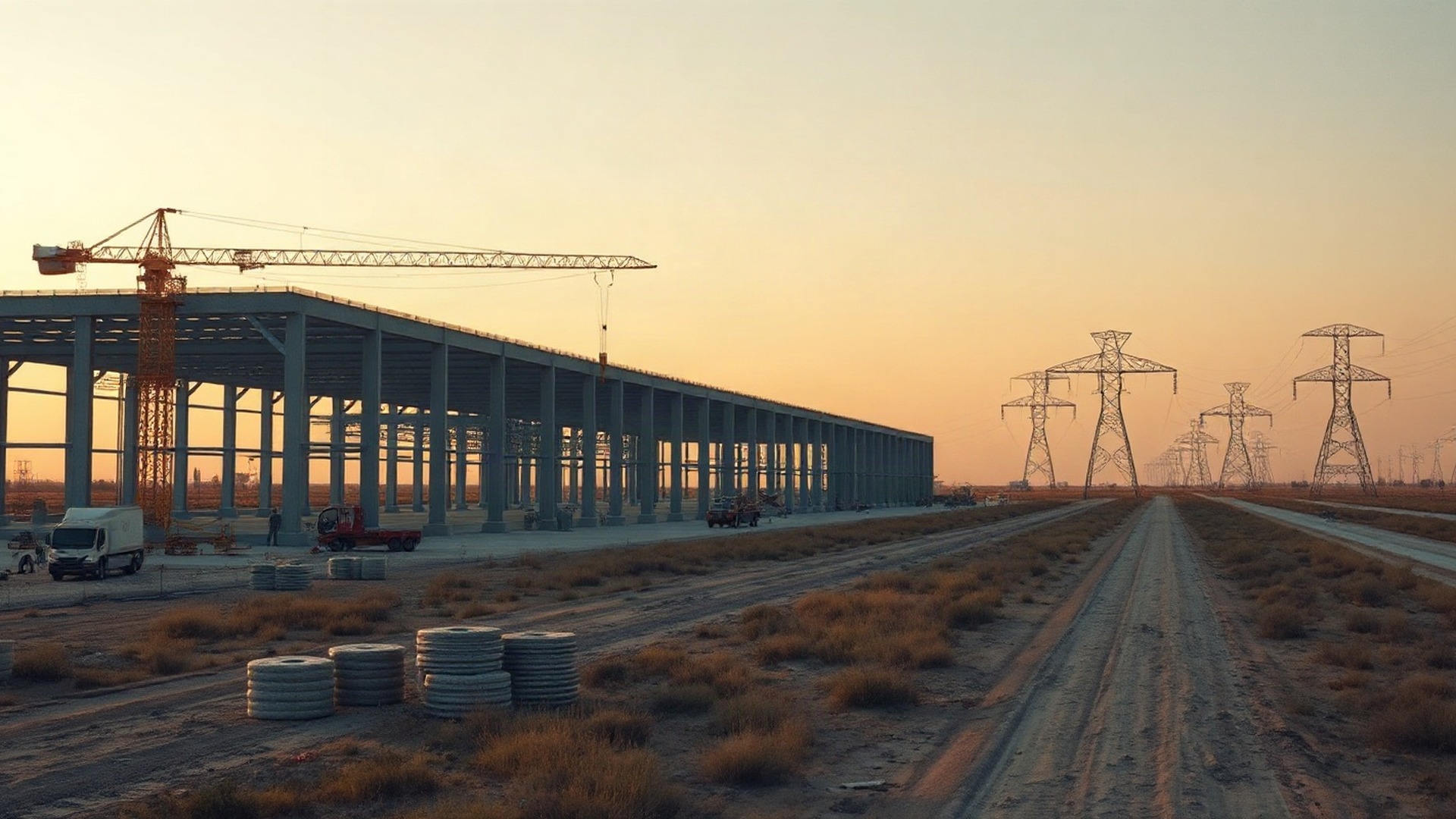
The rent is a promise until the keys change hands. IREN's keys are still sitting in the concrete.
Disclosure: The Signal holds no position in IREN. Positions may change. This is not financial advice.