Qubits get the headlines. GlobalFoundries (NASDAQ: GFS) builds the electronics that must work right next to them, at temperatures colder than deep space. This month, Washington funded that work and picked up just under 2% of the company.
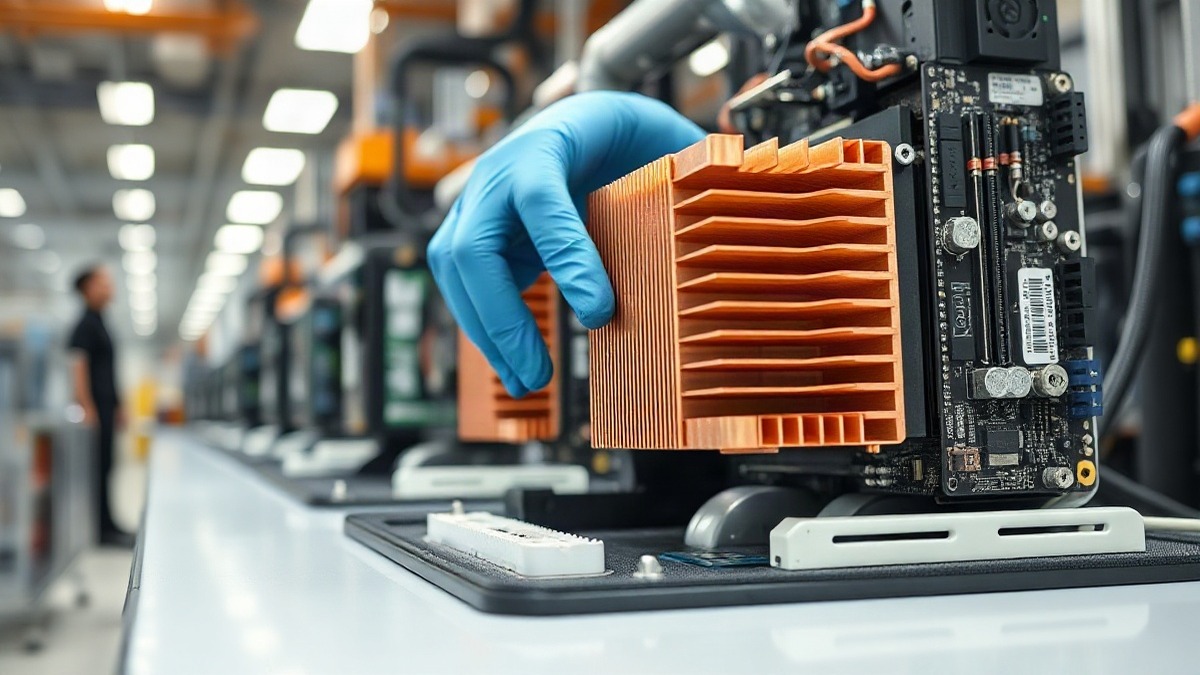
In plain English, GlobalFoundries is a contract chip factory. Other companies design the chips; GF builds them by the million. Its specialty is silicon that never needed the most advanced node: automotive radar, Wi-Fi, power management, defense and space, plus specialty photonics. Around 14,000 employees, fabs 86% full in 2025, $6.8 billion of revenue.
Every quantum architecture still needs a wiring layer, bought no matter which qubit wins. GF is agnostic about the race, and the agnosticism is the strategy.
| Price LIVE | $47.82 |
| Market Cap | $26.7B |
| Forward P/E | 18.22 |
| Total Revenue (TTM) | $6.94B |
| 52-Week Low | $32.02 |
| 52-Week High | $92.55 |
| Analyst Consensus | Buy |
| Analyst Target Mean | $76.00 |
On Sept 8, GF finalized a definitive agreement with Commerce's CHIPS R&D office for up to $375 million over five years, against milestones. NIST describes the target plainly: a secure domestic quantum foundry serving multiple architectures, plus cryogenic CMOS design kits and advanced packaging.
There was also equity attached. Under a separate Sept 3 agreement, GF issued Commerce 9,907,399 shares, a stake that matches the $375 million award to within $5,000. It is about 1.8% of the company, struck roughly 19% below where the shares traded in mid-September.
Then came the shelf. In mid-September GF registered those same 9.91 million shares for resale, with the selling shareholder taking all net proceeds. Mubadala, Abu Dhabi's sovereign fund, still holds roughly 72%. Any re-rate has to clear a registered overhang on top of a holder nobody can outvote.
Rigetti, D-Wave and Quantinuum each finalized awards of up to $100 million the same day. IBM's Anderon unit finalized $1 billion for a pure-play quantum wafer foundry in Albany, adding another $1 billion of its own money. GF has announced no company match.
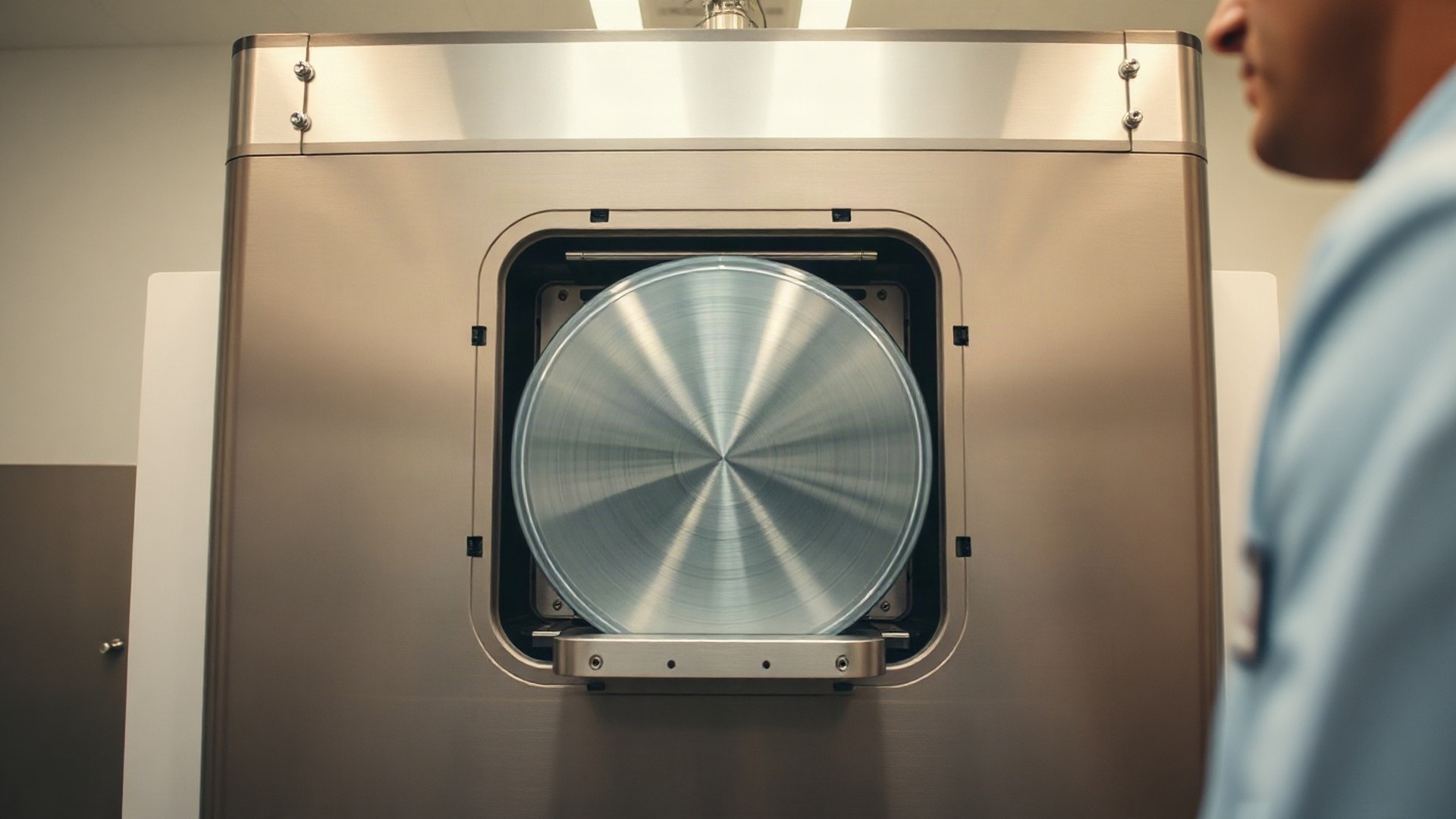
The technical case is not vapor. At millikelvin temperatures, the SPICE models that tell a designer how a transistor behaves simply do not exist. GF's FDX platform adds a backside connection that lets a customer tune threshold voltage until the transistor works anyway, per trade coverage of its 22-nanometer FD-SOI node.
GF works with eight of the world's leading quantum players, naming PsiQuantum, Quantinuum and Quantum Motion. It carries an on-record endorsement from Diraq's founder and has added four quantum engagements since launching Quantum Technology Solutions in May. Real traction, and small traction.
No quantum revenue shows up anywhere. Not in the award release, not in the QTS launch, not in second-quarter earnings, not in the annual report, which reports one segment.
CEO Tim Breen says the first money is engineering work inside the technology services line, which he calls “a kind of call option on the scale to high-volume module manufacturing”. Manufacturing revenue ramps only “towards the end of the decade”.
$375 million over five years is about $75 million a year, roughly 1.1% of trailing revenue. The quantum computing market is forecast at about $1.9 billion in 2026, heading to roughly $19 billion by 2035. GF sells the control electronics inside that, not the qubits.
So what re-rates the equity? Not the award. The shares sit roughly half below their 52-week high, and Wall Street's average target sits nearly 59% above the last close. A re-rate needs quantum to climb out of the technology services line, about 11% of revenue and mostly IP licensing.
Now the bear case, as a short would write it. The $375 million is milestone-gated cost-share R&D, not purchase orders, and GF's own risk language concedes the funding can be “delayed or withheld”. The payment arrived as discounted stock the government has registered to resell, so upside must clear a 1.8% overhang next to Mubadala's 72%.
The story is funded out of the margin. IFRS operating margin fell to 9.7% in the second quarter from 11.6% a year earlier, as operating expenses rose 56%. Adjusted free cash flow landed slightly below zero against about $1.1 billion of trailing capex.
Then there is substitution risk in the layer GF is paid to own. Single-flux-quantum logic runs natively at 10 millikelvin and could shrink cryo-CMOS control.
Intel is building its own cryo line, and IonQ's $1.8 billion purchase of SkyWater, now closed, hands a rival a foundry that served rivals. Bears are proved right if the milestone disbursements slip or quantum never becomes a disclosed line.
The next checkpoint is the third-quarter print, guided to about $1.9 billion of revenue at a gross margin of roughly 30.5%. Watch whether a milestone disbursement actually lands, and whether those eight partners turn into multi-year purchase commitments.
GlobalFoundries is selling the controller, not the console. If quantum works, someone must build the chips that keep qubits alive at fifteen millikelvin. Washington has now paid a discounted price for a front-row seat.
Disclosure: The Signal holds no position in GFS. Positions may change. This is not financial advice.