Here's a number that should stop you cold: $163 billion. That's GE Vernova's total backlog as of Q1 2026 — more than four years of revenue, already contracted, already spoken for. And here's the kicker: the company's sold every single gas turbine slot through 2030. Not "most of them." Not "nearly all." Every. Single. One.
Everyone's been obsessing over Nvidia's next GPU, Microsoft's next frontier model, or which hyperscaler is building the biggest cluster. But here's a question nobody's asking: where's all the power going to come from? Because none of this works without electrons, and right now the world is running dangerously short of the stuff that keeps the lights on.
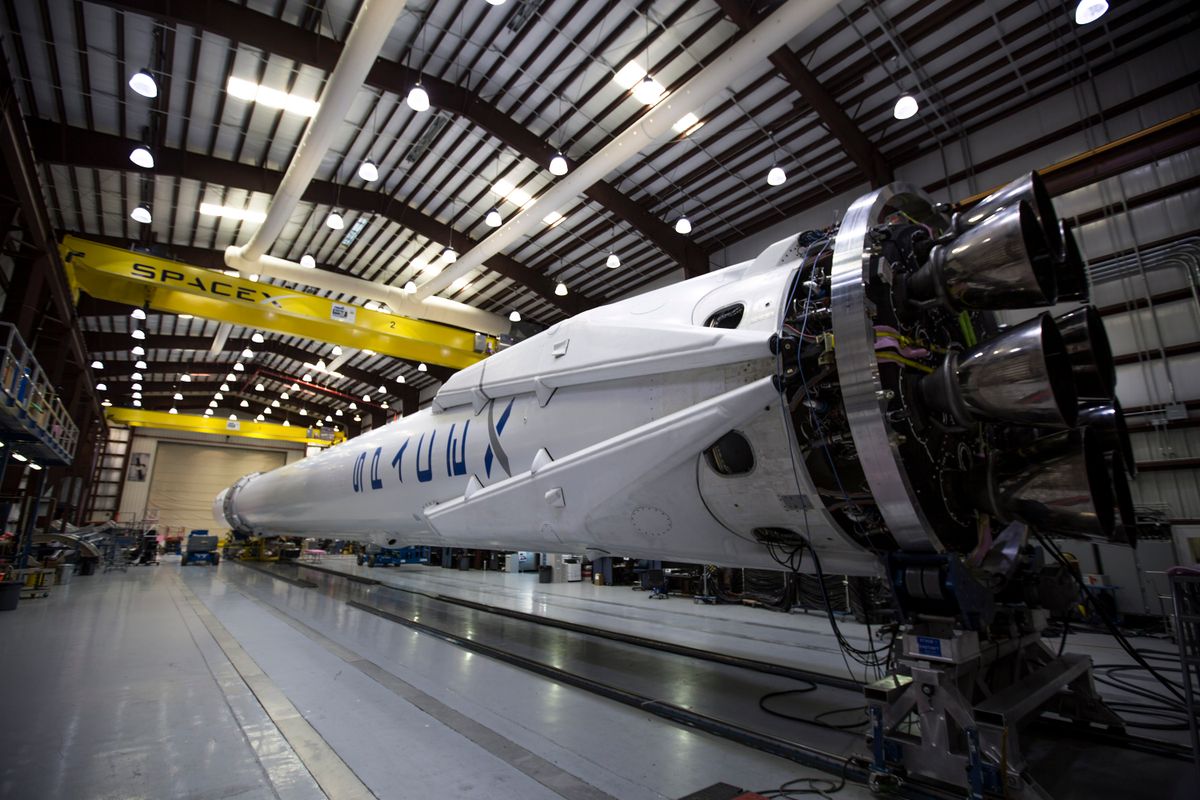
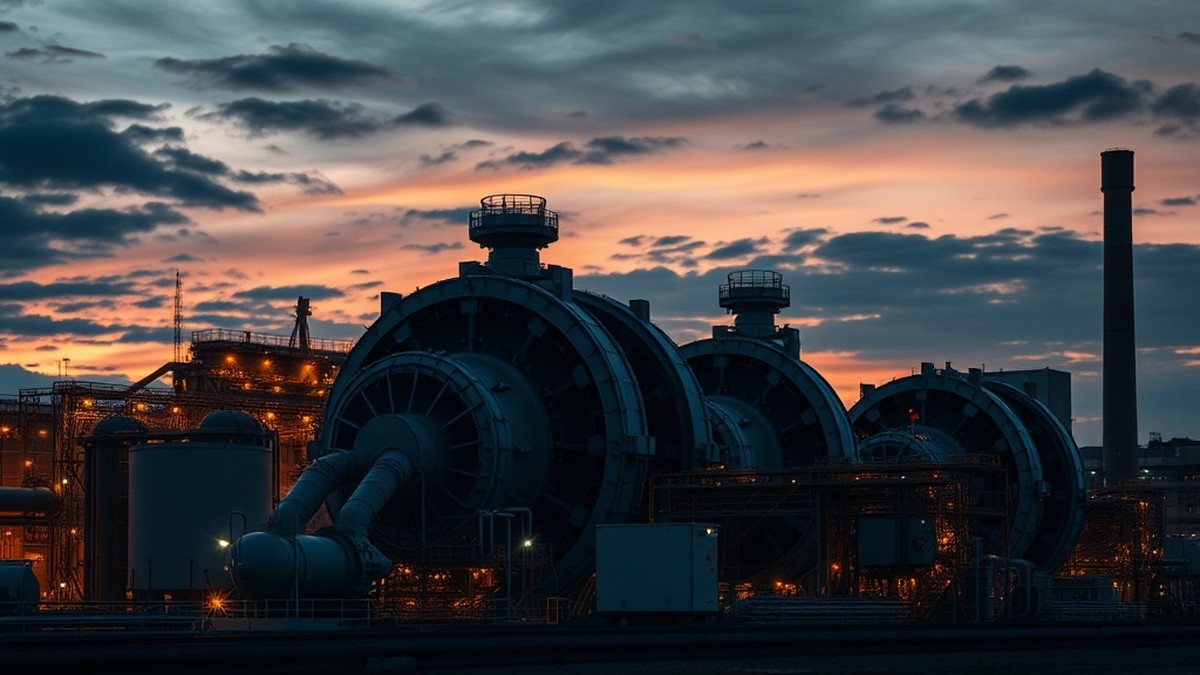
Enter GE Vernova. Spun off from General Electric in April 2024, this is the company that builds the heavy-duty gas turbines, grid transformers, electrification software, and yes — the nuclear reactors — that keep AI data centers from going dark. They control about 30% of the global gas turbine market alongside Siemens Energy and Mitsubishi Heavy. Together, those three companies represent more than 70% of the world's capacity to build large gas turbines. And they're all at absolute max capacity. A new entrant would need five to seven years just to catch up — assuming they could even find the skilled engineers and specialized foundries to pull it off.
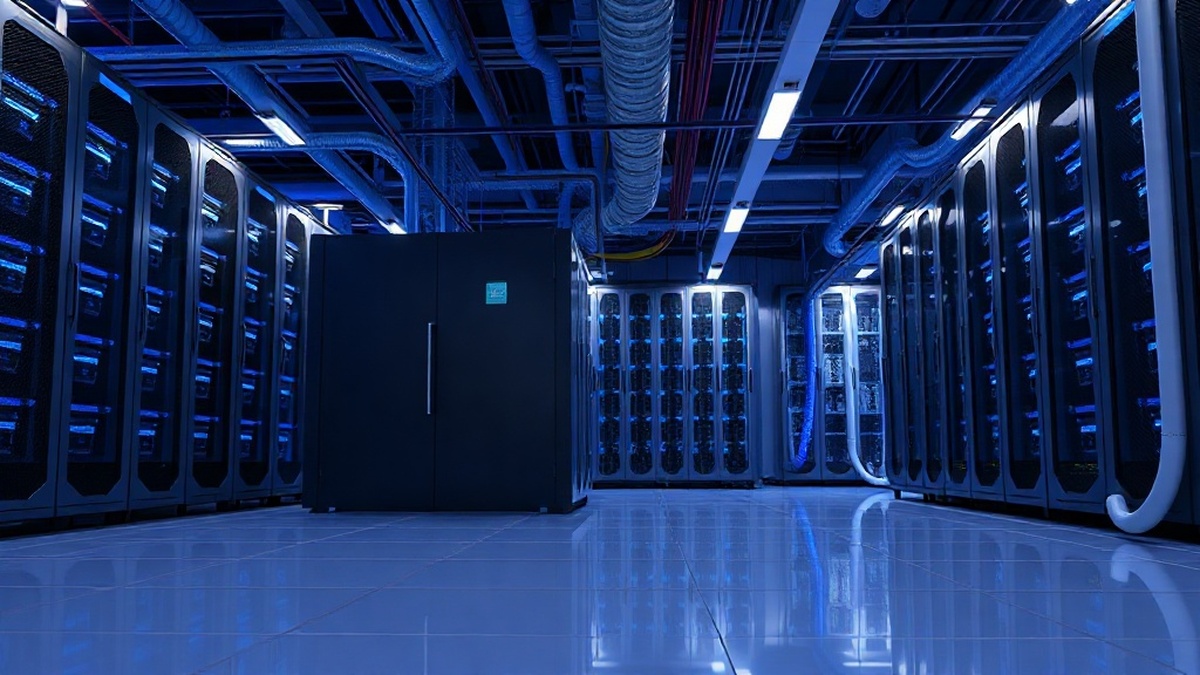
The data center numbers are staggering. In Q1 2026 alone, GEV's electrification segment booked $2.4 billion in data center equipment orders — more than all of FY2025. The Electrification segment, handling grid solutions and power conversion, is growing at 20% organically and carries a $31 billion backlog of its own. That's the part of the business nobody talks about, and it might be the most explosive growth engine in the entire company.
Then there are the mega-deals. Project Kilby — a joint venture between Microsoft, Chevron, and Engine No. 1 — is a 2.67-gigawatt colossus powered by seven GEV turbines, backed by a 20-year power purchase agreement. Crusoe Energy ordered 29 LM2500XPRESS aeroderivative units, roughly a gigawatt of power. NRG Energy is collaborating up to 5.4 GW. NextEra signed up for gigawatts. These aren't exploratory coffee meetings — they're signed, financed, and in the construction pipeline.
Here's where the financial story gets interesting. GEV's adjusted EBITDA margin was sitting at around 6% in FY2025. Management's guiding 11-13% for this fiscal year and targeting 20% by 2028. Revenue hit $38.1 billion in FY2025 and they're aiming for $56 billion by 2028 — a nearly 50% expansion in four years. Free cash flow came in at $3.7 billion last year, guided to $5.0-5.5 billion this year, with a cumulative target of at least $24 billion by 2028. And the balance sheet? Pristine. $8.8 billion in cash against just $1.2 billion in debt. Near-zero net debt. That's the kind of firepower that lets you acquire strategically, invest in capacity expansion, and return capital to shareholders — all at once.
The pricing power tells you everything about supply and demand. Early 2026 orders are running 10 to 20 percentage points above Q4 2025 levels. When you're sold out years in advance and your customers are hyperscalers who literally cannot afford to wait for power, you get to name your price. That's the kind of dynamic that turns industrial companies into compounding machines.
And then there's the nuclear angle — far more real than most people realize. GE Vernova's BWRX-300 small modular reactor is the first SMR under construction anywhere in the Western world. Ground broke at Ontario's Darlington site in May 2025, with first power targeted for 2030. They've got at least six committed or potential customers across four countries: TVA, Duke Energy, AEP, Ontario Power Generation, Poland's OSGE, and UK interests. TVA filed the first U.S. construction permit application for an SMR in May 2025, backed by a $400 million DOE grant. The BWRX-300 also passed the UK's Step 2 Generic Design Assessment faster than any SMR in history. These reactors won't contribute meaningful revenue until the early 2030s, but as a long-duration call option on the future of clean baseload power? It's hard to find better.
Look, it's not all upside. The wind segment has been a persistent drag — roughly $600 million in EBITDA losses for two straight years. Management's effectively stopped taking new offshore wind orders, which is the right call, but it's still dead weight. And at roughly 44x forward earnings, this stock has a lot of perfection priced into the multiple. If the AI buildout decelerates, if gas faces unexpected regulatory headwinds on data center emissions, or if GEV stumbles on execution — that multiple compresses fast.
But here's the thing — the structural story is real in a way most investment narratives aren't. The AI buildout is creating a power demand cycle unlike anything we've seen in decades. Data centers are projected to grow from roughly 4% of U.S. electricity consumption to 9-12% by 2030. Every gigawatt of IT load needs roughly 2.5 GW of generating capacity behind it for reliability. GEV sits at the intersection of AI infrastructure, electrification, grid modernization, and energy security. Everyone's been watching the chips. Maybe it's time to look at what's plugging into the wall.
Disclosure: The Signal holds no position in GEV. Positions may change. This is not financial advice.