Constellation Energy hit $412.70 on January 6. By July 8, it was trading at $228.63 — a 44.6% collapse that wiped out roughly $66 billion in market value in six months. If you only read the headlines, you'd think the nuclear renaissance was over before it started.
It's not. And the market is about to remember that.
Here's what actually happened: the Calpine acquisition closed on January 7 for $16.4 billion, making CEG a 55-gigawatt operator across 40 states — the single biggest zero-carbon power fleet in the country. That deal was transformative, but the hangover was severe. Calpine's legacy holders dumped 11 million shares in a $3.1 billion secondary on June 1, sending the stock into a tailspin. Then Citi cut its price target from $348 to $297 on July 1, citing PJM reliability concerns, and the stock hit its 52-week low four days later.
Neither event had anything to do with the underlying business. The secondary was a mechanical overhang — former Calpine investors taking profits. The Citi downgrade was a macro call on grid constraints, not a verdict on Constellation's execution.
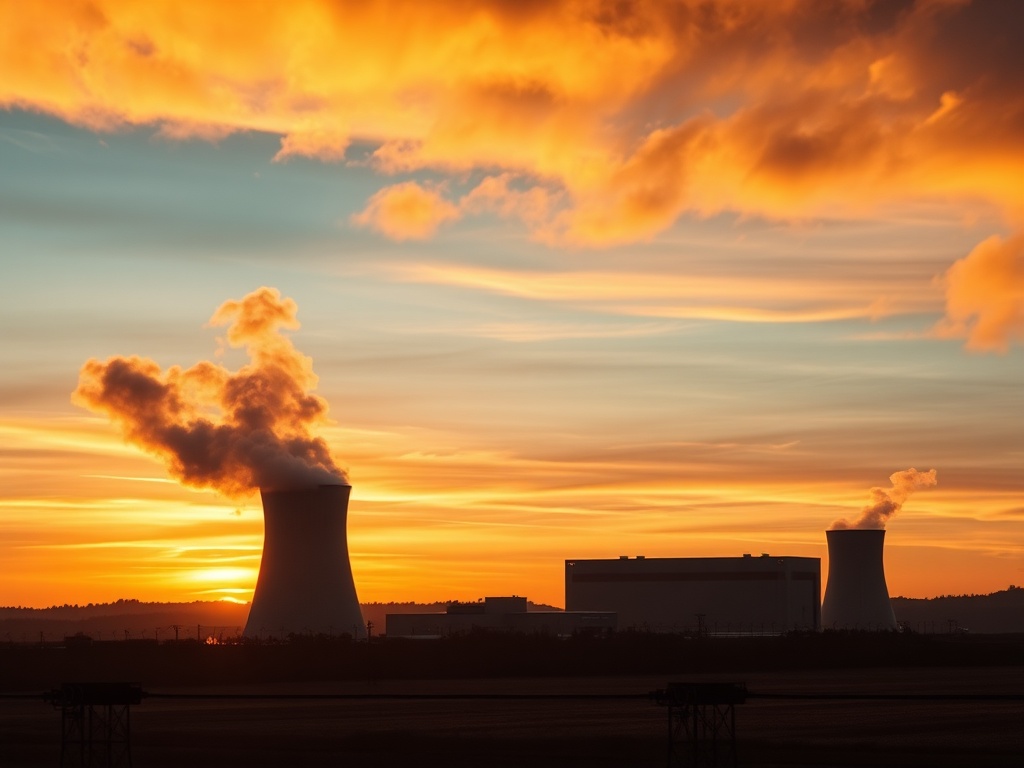
The facts on the ground are what matter. Constellation operates 13 nuclear plants with over 19,000 megawatts of capacity running at a 94.7% capacity factor — generating power 94.7% of the time, rain or shine. That fleet produces roughly 10% of all clean energy in the United States. After Calpine, the company manages 55 gigawatts across 40 states, making it the dominant baseload electricity provider in the Eastern Interconnection.
The AI buildout has turned that fleet into a national asset. In January, CEG signed an 835-megawatt, 20-year deal with Microsoft for the Crane clean energy center at roughly $100 to $102 per megawatt-hour. In March, it signed an even bigger one — 1,121 megawatts with Meta at the Clinton plant, the largest corporate nuclear power purchase agreement in history. And in June, Walmart signed its first-ever nuclear PPA. Collectively, these hyperscaler deals are on track to deliver roughly $1.5 billion in annual revenue by 2028.
This brings us to the catalyst that could break the stock out of its six-month rut: the PJM capacity auction.
The PJM Interconnection serves 65 million people across 13 states and the District of Columbia. Two consecutive capacity auctions have failed to attract enough supply to meet reliability targets. The Eastern Grid — from Chicago to Washington, D.C. — is running on razor-thin reserve margins. On July 14, Bloomberg reported the upcoming results would reveal just how tight supply has become. If the auction delivers record-high capacity prices, it validates a thesis that has nothing to do with earnings beats or AI deal flow: Constellation's 24/7 nuclear fleet is a toll road, and the traffic is only getting worse.
At $256.44, CEG trades at 22.3 times trailing earnings and 18.9 times forward earnings. Revenue hit $29.87 billion over the trailing twelve months — up 63.8% year over year. Operating margin sits at 21.9%, net profit margin at 12.7%. FY2025 net income was $2.32 billion. Free cash flow is negative at minus $4.48 billion, but that's entirely Calpine-related capex — operating cash flow of $4.55 billion tells the real story. Total debt stands at $22.5 billion against a $91.7 billion market cap.
Wall Street sees the disconnect. The analyst consensus is Strong Buy — 20 buys, 3 holds, zero sells — with a mean price target of $357.81. That's 39.5% upside from here. Argus downgraded in May on a “utility valuation, not tech” thesis, lowering its target from $425 to $350. Citi cut its target to $297 in July. Nobody on the sell side is calling this a sell.
And Constellation is doing what companies do when they know they're undervalued: buying back stock. After the Calpine secondary sold 11 million shares on June 1, CEG bought back 2 million of them for $558 million. The company still has $3.5 billion remaining in its buyback authorization. If you think CEO Joe Dominguez is going to let the stock sit at $256 while the PJM auction reprices the entire Eastern Grid, you haven't been paying attention.
Next earnings is August 6, with consensus estimates at $2.41 per share. Between now and then, the PJM capacity auction results will land. If they show what Bloomberg's sources are signaling — that the grid is dangerously tight and baseload nuclear is the only answer at scale — the 37.8% drawdown from the high will start looking less like a warning and more like an invitation.
Disclosure: The Signal holds no position in CEG. Positions may change. This is not financial advice.