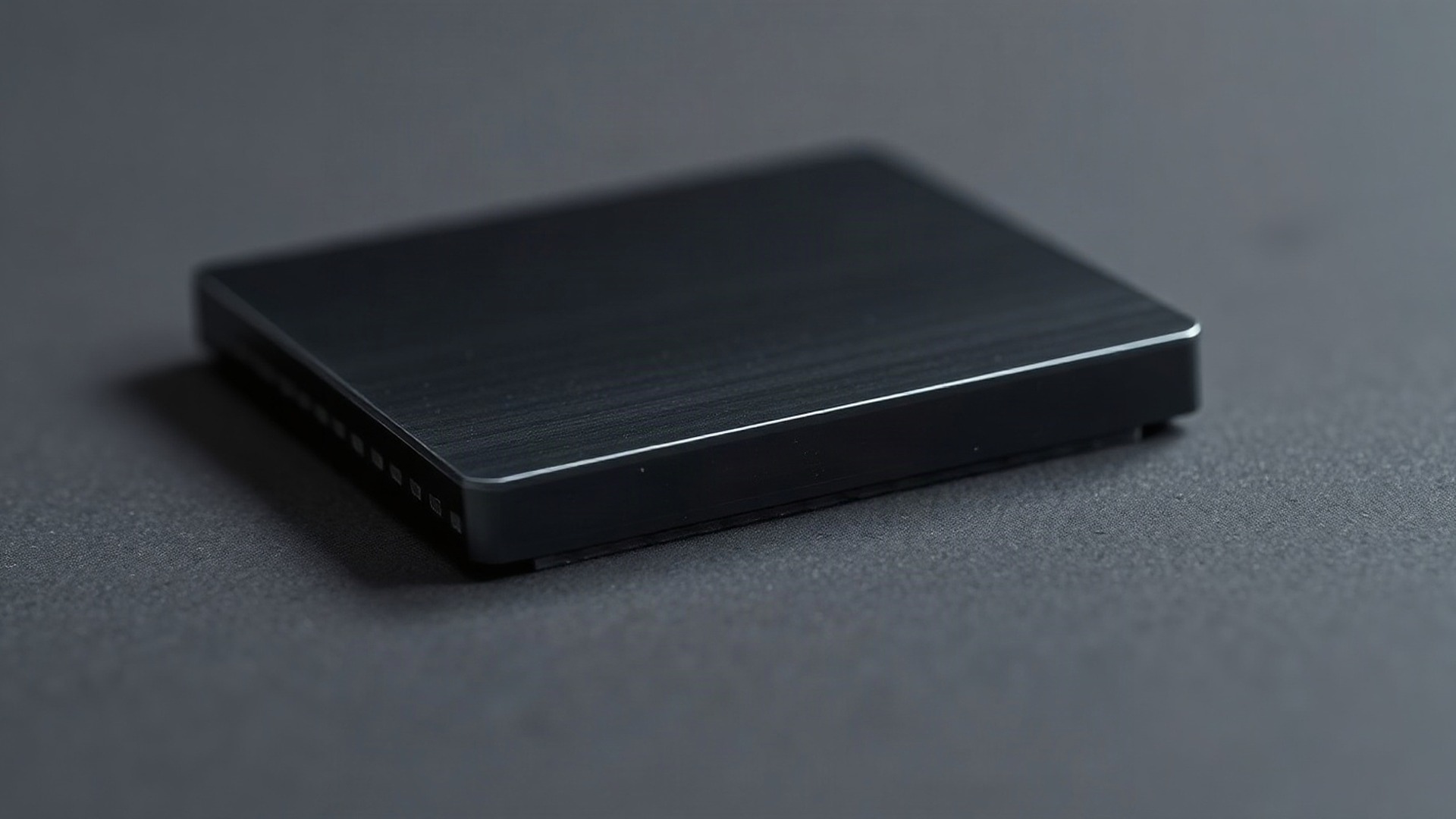
At the Apsara Conference in Hangzhou, Alibaba's chip unit T-Head unveiled the Zhenwu V900, which its chief executive called China's most powerful AI accelerator. Alibaba says it delivers three times the performance of the Zhenwu M890, launched in May.
Alibaba (NYSE: BABA) is China's e-commerce and cloud giant. Taobao sells the goods, Alibaba Cloud rents out the computing AI models train on, and T-Head designs the silicon underneath. Call it the landlord who owns the mall, the power station and the generator factory.
| Price LIVE | $115.75 |
| Market Cap | ~$287.7B |
| Forward P/E | 12.78 |
| Total Revenue (TTM) | ¥1.045T |
| 52-Week Low | $91.99 |
| 52-Week High | $192.67 |
| Analyst Consensus | Strong Buy |
| Analyst Target Mean | $185.91 |
The V900 carries 216 gigabytes of memory and 1,200 gigabytes per second of inter-chip bandwidth, plus native FP8 and FP4 precision. Those two formats decide how cheaply a model runs, which is where the money is.
The rack matters more than the die. A new supernode server pairs the V900 with T-Head's in-house ICN Switch, letting one cluster hold up to 500,000 cards. Alibaba says that is enough for frontier models of five to ten trillion parameters, with next-generation Yitian server CPUs due in 2027.
Mass production starts in the first quarter of 2027. Until then it is a blueprint, not inventory.
Scarcity is what makes it matter to the sector. Alibaba Cloud now targets more than 20 gigawatts of global data-centre capacity by 2032. In Wu's words, the goal will fuel the industry's exponentially rising demand for AI.
Wu also said global shortages across the AI data-centre supply chain are currently limiting how fast Alibaba can scale its compute. Translation: the constraint moved from demand to parts. Whoever can source silicon sets the pace.
The models ride the same curve. Alibaba says its next-generation Qwen 4 is in training, with the Qwen 4.5 and Qwen 5 series projected at five to ten trillion parameters. Today's flagship, Qwen3.8-Max, sits at 2.4 trillion.
This is the customer who builds his own factory instead of queuing at a store that keeps changing its opening hours. Alibaba says T-Head's Zhenwu chips already serve more than 650 customers across industries. That is the part a slide deck cannot fake.
The timing is not subtle. It lands days before Xi Jinping arrives in Washington for a state visit with Trump, where AI chip policy is expected to be central. Silicon self-sufficiency is now an argument both capitals make.
For the shares, the argument is what Alibaba is becoming. It still changes hands near 12.8 times forward earnings, roughly 29% below where it sat a year ago. That multiple prices an e-commerce company with a cloud habit, and only a compounding cloud and AI mix breaks it.
Thirty-nine analysts average a Strong Buy, and their mean target sits roughly 60% above the last close. The shares, meanwhile, trade near the low end of a 52-week range. Either the analysts or the tape is wrong.
The bill arrives before the credit. Revenue reached ¥1.045 trillion over the trailing year, up 8.6%, with free cash flow an outflow near ¥82.6 billion and operating margin at 7.3%. Net cash of roughly ¥119 billion is cushion, not fuel, for that ambition.
Now the short case, and it starts with cash. Free cash flow stayed deeply negative, and June-quarter profit fell more than 75% from a year earlier. Capex leaves the bank today and lands in revenue that has not arrived.
Then there is the chip itself. The three-times claim is vendor-reported, and no independent party has benchmarked the V900. Alibaba has not named the foundry that will build it, which matters because US equipment export controls squeeze exactly that domestic capacity.
The twenty gigawatts is an announcement, not a signed build, with no year-by-year capex attached. And if Washington ever loosens Nvidia's China restrictions, a homegrown accelerator becomes optional rather than existential. That is the whole reason the part exists.
What proves the bears right is silence. If mass production lands in early 2027 with no customer deployments disclosed, that is the first tell. The second is free cash flow staying negative through the next fiscal year.
Capex is the price of the option and the chip is the reason to pay it. The market is paying for the concrete while refusing to pay for the architect, and that gap is the trade.
What we're watching: Alibaba's September-quarter results, expected in November, where cloud growth and capital spending guidance share a page. The other clock is the first quarter of 2027, when the V900 has to ship to somebody. Deployments, not benchmarks, settle this.
Disclosure: The Signal holds no position in BABA. Positions may change. This is not financial advice.