Alibaba just rang Hong Kong's bell louder than anyone ever has. The e-commerce giant priced a record share placement — roughly $10.2 billion of new stock — and every dollar of it is earmarked for AI. Not shopping carts. Not logistics. AI, in all caps.
If you still think of Alibaba as the Amazon of China, you're about a decade behind. Taobao and Tmall move more packages than almost anyone on the planet, sure. But this is also China's number-one cloud provider, the studio behind the Qwen family of open-weight AI models, and a chip designer with its own silicon in the T-Head Yitian line. Chips, cloud, models, apps — it's the closest thing China has to a full-stack AI company, all under one roof.
That's why this deal matters far beyond one balance sheet. America's hyperscalers are pouring a combined $791 billion into AI, per Capital Group data via Reuters. China's big four? Roughly $118 billion. The gap is enormous — and Alibaba just told the world how it plans to close it: a three-year, ¥380 billion capex plan, about $56.5 billion, for AI infrastructure, with roughly half already committed.
The context makes the check feel even bigger. In the June quarter, net profit fell 75% from a year earlier while capital spending jumped 75% to ¥67.7 billion. In other words, Alibaba is leaning into the buildout so hard it's willing to eat the earnings hit now — because sitting out the AI race isn't an option.
The mechanics of the raise were historic. It's the largest follow-on share sale ever for a Hong Kong-listed company, and the third-biggest primary placement globally this year behind two U.S. hyperscaler mega-deals. Alibaba issued about 710 million new ordinary shares at an 8.4% discount to the prior close, diluting existing holders by roughly 3.6%. Orders came in at about $28 billion — nearly 3x oversubscribed — with long-only funds and sovereign names like Qatar's sovereign wealth fund, Norway's Norges, and Hillhouse taking close to 40% of the book.
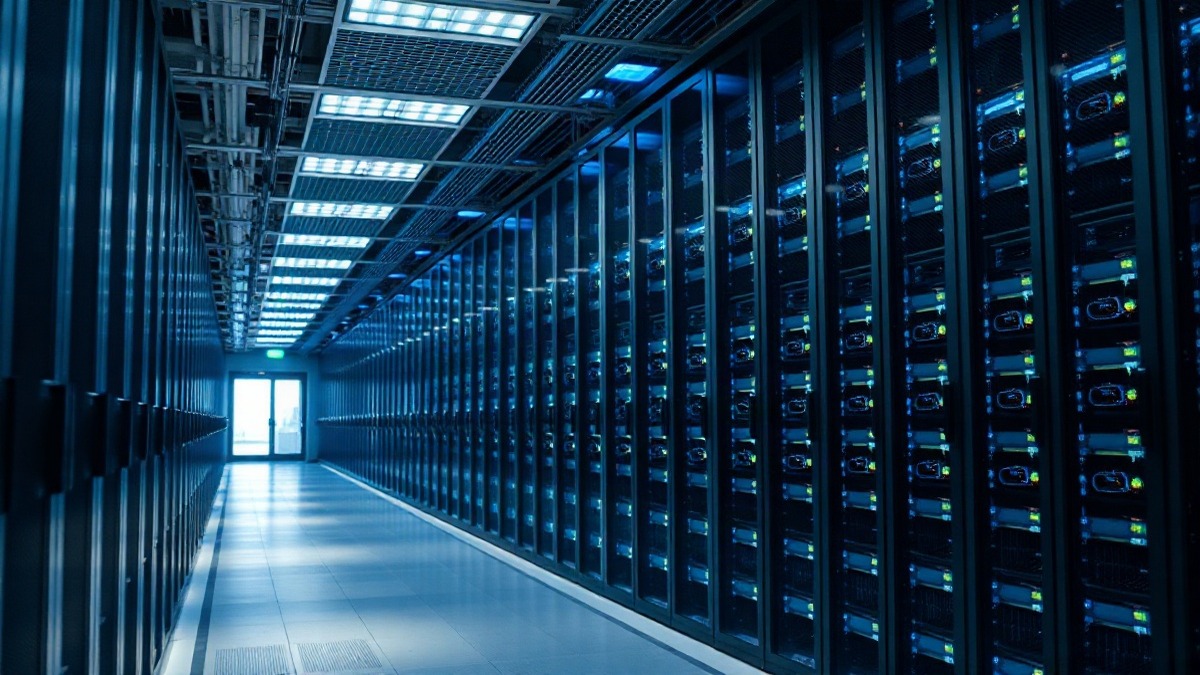
Here's what the money actually buys: data centers running on Yitian chips, cloud capacity for enterprise customers, and the compute to train bigger, better Qwen models. It's the same playbook as America's hyperscalers — just financed through one of the boldest capital raises Asia has ever seen.
One wrinkle worth knowing: the deal was offered only to non-U.S. investors under Regulation S. ADR holders in America couldn't participate, which makes the demand even louder. Wall Street watched from the sidelines while Hong Kong did the heavy lifting.
The market reaction? Loud but contained. Shares opened Hong Kong trading down about 8%, then closed down 8.5% on massive volume after sliding as much as 10.5% intraday. That's the price of a discount — but here's the tell: insiders bought the dip. Chairman Joe Tsai and CEO Eddie Wu picked up roughly $15 million of stock at the placement level on Monday. When the people running the company treat a 3.6% dilution as a bargain, listen.
And the timing was no accident. The same day the placement hit the tape, Alibaba shipped Wan3.0, its next-generation AI video model. New model, new money, new chips — a full-stack flex disguised as a capital raise.
Here's what the skeptics get wrong: they see a share sale and smell dilution. But this is a company trading at a forward multiple in the low double digits — the market still prices it like a mature retailer while it builds a Chinese hyperscaler in-house. Qwen already powers Apple's iPhone AI in China, and its open-weight models are the foundation layer for 300,000-plus derivatives across the ecosystem. This is a pick-and-shovel story where the shovel maker also owns the mine.
The bottom line: Alibaba just bet its future on being China's AI backbone — and got the check to prove it. Record deals happen when conviction meets capital, and Monday's chaos — the discount, the dip, the insider buying — is what a conviction trade looks like in real time. Watch the capex. That's where the story lives now.
Disclosure: The Signal holds no position in BABA. Positions may change. This is not financial advice.