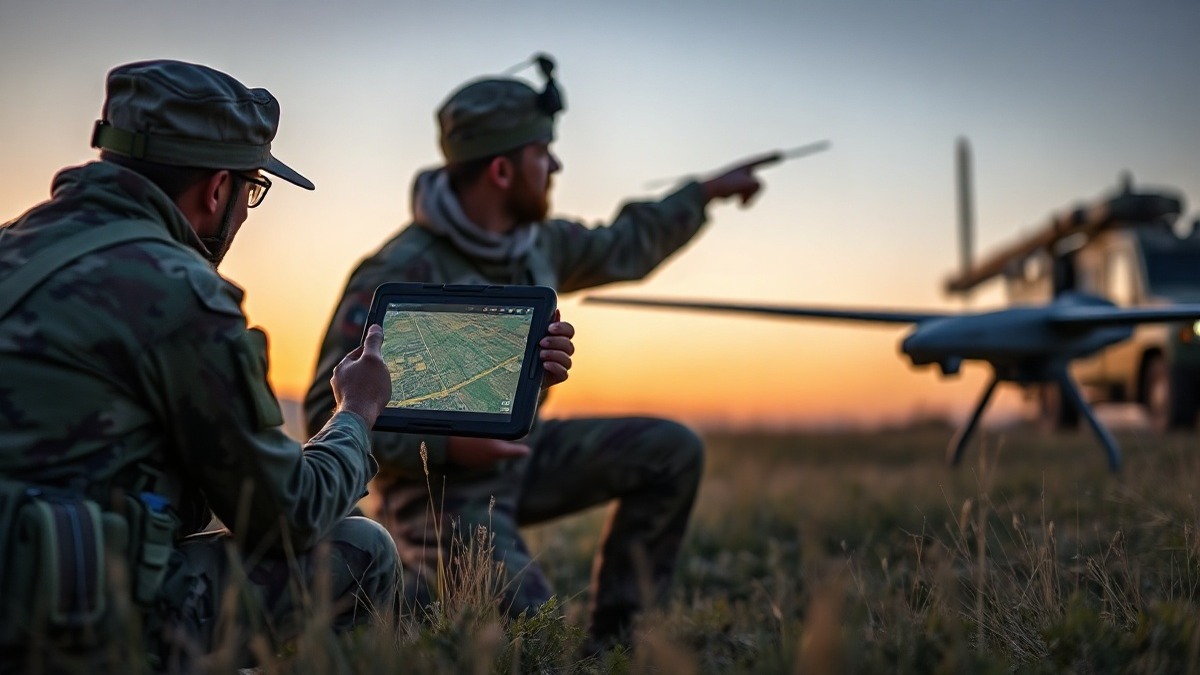
If you want to understand AeroVironment, skip the headlines and watch a single video: a Ukrainian drone operator launching a Switchblade, the munition circling patiently overhead, then a flash, and a Russian tank is gone. That clip is the thesis in sixty seconds, because the Switchblade is the only Western loitering munition with years of large-scale combat use, and AeroVironment is the only company fielding it at meaningful scale. The market seems to have forgotten all of that. Shares have fallen more than half from their peak, punished for a space-contract blowup that has nothing to do with the franchise that actually matters. The market's story and the company's story have almost completely diverged.
| LIVE Price | $186.73 |
| Market Cap | ~$9.4 billion |
| Trailing Revenue | $1.98 billion |
| Organic Growth | +30% year over year |
| Bookings (FY26) | $2.7 billion |
| Funded Backlog | $1.2 billion |
| Analyst Consensus | 1.6 (Buy) |
| Mean Analyst Target | ~$226 |
Start with what makes the moat real, because it isn't a patent — it's combat data. Roughly 3,000 SB600s have been built, most shipped to Ukraine, and every engagement feeds the next Block upgrade, a design loop competitors can't replicate without their own years of battlefield telemetry. That incumbency shows up as procurement lock-in: sole-source on the Army's $990 million Lethal Unmanned Systems IDIQ, the LASSO program of record with the new SB400, one of three vendors on the Marines' OPF-L effort, and the Navy's COCO ISR pick for the JUMP 20-X. Production is at historic levels — several thousand Switchblades a year, roughly 500 units a month — and the new Salt Lake City facility, on track to begin production in the spring, is sized for more than $2 billion of annual output. The installed base — tens of thousands of Ravens delivered, the majority of unmanned aircraft in the DoD inventory — makes its HALO software the common ground-control layer across the fleet.
The fiscal year that just ended reads like an inflection, not a crisis. Revenue hit $1.977 billion, up 141% as reported and 30% organically. Bookings reached $2.7 billion with a book-to-bill above 1.3, and funded backlog jumped 65% to $1.2 billion. Yes, GAAP net income was a loss of $5.40 a share, but that's almost entirely BlueHalo amortization and goodwill, while adjusted EPS was $3.31 and adjusted EBITDA hit $286 million, above guidance. Argue about adjusted metrics if you like, but organic growth and backlog aren't adjusted. They're contracts and delivery orders.
Add the budget backdrop, which looks drawn up for this company. The FY27 request gives the new Defense Autonomous Warfare Group $54.6 billion against a $225 million standing-up budget the year before, with $39.2 billion of that in mandatory Drone Dominance funding. Congress will trim, because Congress always trims, but the direction is unambiguous: the Pentagon is reorganizing around exactly the autonomous, attritable systems AeroVironment already builds at scale. The global loitering munition market is forecast to roughly double by 2030 on a ~20% CAGR, with the US the fastest-growing slice.
The international side is where the Ukraine proof-point compounds. Greece, the UK, France, Romania, Taiwan, Canada — the FMS pipeline reads like a NATO membership list, backed by a five-year, $874 million IDIQ for Groups 1–3 UAS and counter-UAS systems. The most important line is the phased co-production agreement in Ukraine: components first, then full assembly. That's the ultimate validation of the combat-proven thesis, and a marketing budget no competitor can match — nobody else has the combat record to advertise.
The bears have real ammunition, and it deserves an honest hearing. The SCAR space termination triggered a $151 million impairment and a pending securities class action — that overhang is why the stock sits where it does. The FTUAS restructure shut the JUMP 20 out of the Army's final two, forcing a pivot to the Navy, international customers, and the new P550. Anduril is scaling Barracuda and Altius, UVision's Hero-120 cleared a key Army production milestone, and RBC argues the margin ramp is optimistic against slowing defense spending growth and the FY27 guide's deceleration from 30% organic growth. None of this is trivial. But note what it attacks: space, one contested Army program, and a market growing fast enough for multiple winners. Nothing touches the Switchblade franchise's core position.
So frame the setup simply: the stock is down more than half from its peak because of a space-contract disaster, while the business that drives its value — combat-proven loitering munitions with sole-source programs, a production ramp, and a global FMS wave — is stronger than ever. The moat is in loitering munitions, not space, and the market is pricing the company as if it's the other way around. Twenty analysts hold a Buy consensus with a mean target around $226, and while targets lag, the asymmetry is real at these levels. The confirmation points are the first-quarter print in early September and whether FY27 bookings keep pace with last year's $2.7 billion. If they do, the SCAR story fades into what it always was: a footnote to a franchise.
Disclosure: The Signal holds no position in AVAV. Positions may change. This is not financial advice.