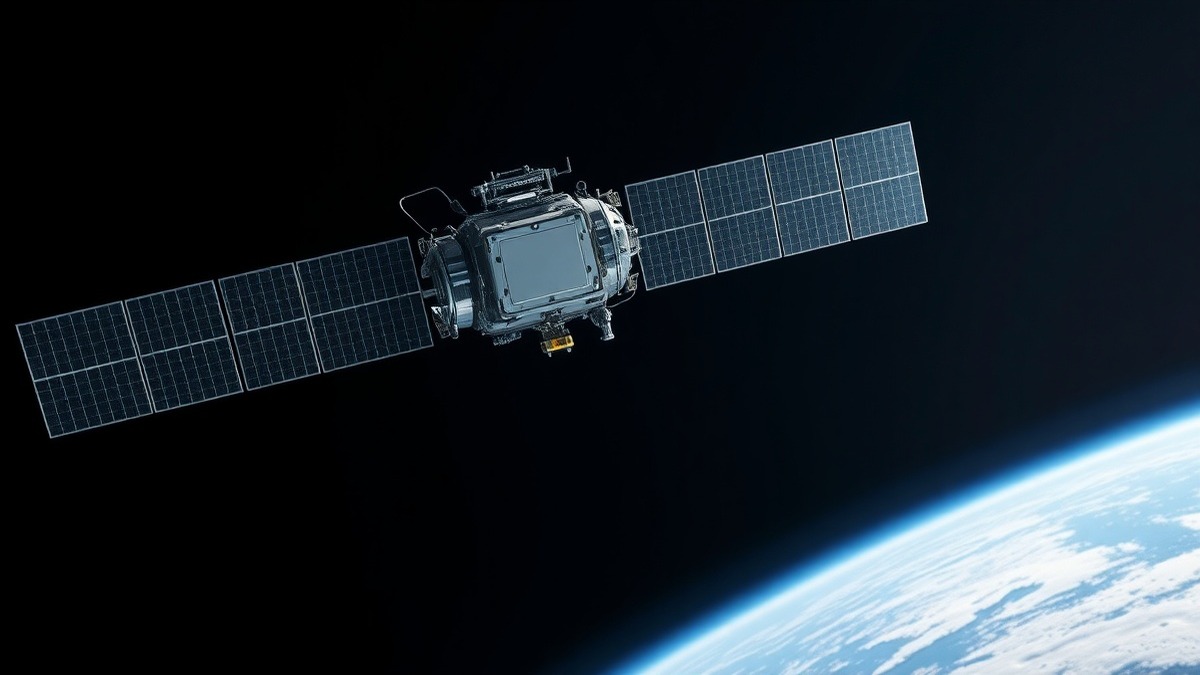
The satellite-to-phone race changed shape in a single quarter. AST SpaceMobile secured full commercial authorization from the FCC in April, the three largest American carriers formed a joint venture around direct-to-device service in May, and on August 5 three more BlueBird satellites are scheduled to ride a Falcon 9 to orbit. The company that has spent years promising to turn every smartphone into a satellite phone is suddenly close to proving it — and the market is finally pricing in the possibility that it works.
| fy2025Revenue | $70.9M |
| cash | ~$3B |
| contractedCommitments | >$1.2B |
| satellitesInOrbit | 9 |
| mnoAgreements | ~60 |
What AST is building is deceptively simple in concept: space-based cellular broadband that works on unmodified phones. No special hardware, no proprietary app, no walking to a window. The BlueBird satellites carry the largest phased-array antennas ever flown in low Earth orbit, effectively acting as cell towers hundreds of miles up, using spectrum licensed to terrestrial carriers so a standard handset can lock on. Ten BlueBirds were launched through mid-June, but one was lost, leaving nine in orbit today. The company needs roughly forty-five to sixty for continuous coverage of the United States and about ninety for global reach, and it holds licenses for two hundred forty-eight. The FCC's April order, DA 26-391, granted full commercial authority on the 700 and 800 megahertz bands in partnership with AT&T, Verizon, and FirstNet — the first authorization of its kind anywhere.
The moat begins with spectrum, and it is a moat of alignment rather than ownership. AST does not need to buy its own airwaves; it rides the spectrum of the roughly sixty mobile network operators it has signed, an ecosystem reaching about three billion subscribers with more than $1.2 billion in contracted commitments already on the books. Those carriers are not arm's-length customers. AT&T, Verizon, and T-Mobile formed a joint venture in May to commercialize direct-to-device service together, which means the largest distribution machines in American telecom now hold a financial stake in AST's success. When your customers are also your investors and your distribution channel, they tend to integrate you into their networks rather than treat you as a competitor.
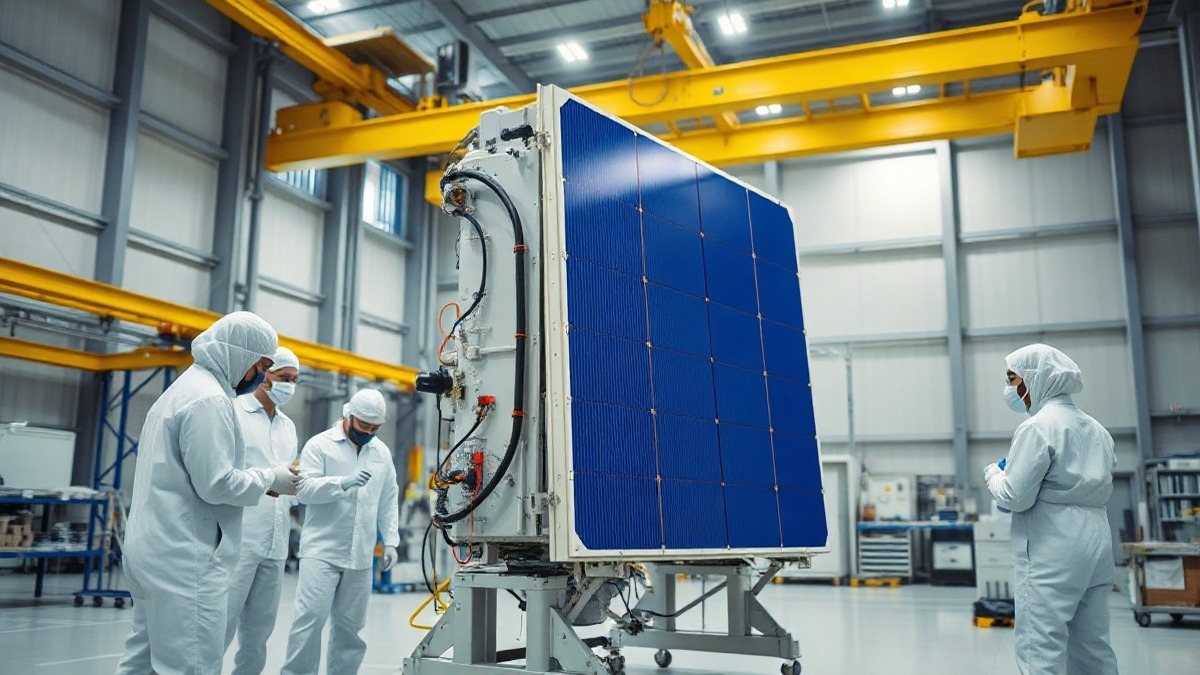
The technical and regulatory layers reinforce the commercial one. The BlueBird phased arrays are an order of magnitude larger than anything a competitor has flown, and AST builds its satellites in-house, vertically integrated from design to assembly. The FCC license is not merely a permission slip; paired with the FirstNet relationship and contracts with agencies like the SDA and MDA, it gives AST an entrenchment in American infrastructure that is difficult to replicate. Government customers move slowly, but once embedded they tend to stay.
The threat, of course, is Starlink. SpaceX has been selling direct-to-cell commercially since late 2024 and counts roughly sixteen million connections — a staggering head start in raw numbers. But those connections are limited to messaging and app-based texting; they are not broadband. Starlink's V2 constellation, the version that could close the gap, depends on Starship and is not expected until mid-2027. That creates a window: if AST reaches continuous US broadband coverage while its rival is still delivering texts, it owns the category in the world's most valuable telecom market. If Starship ramps on schedule, the window slams shut. The entire thesis is a race against a launch manifest.
The risks are as real as the moat. AST launches on the rockets of its biggest competitor, a dependency that became painfully visible when BlueBird 7 was lost aboard the failed New Glenn launch. The capital profile is intense: roughly three billion dollars in convertible debt against about three billion in cash — a further $1 billion convertible raise closed in July — with capex running near $1.1 billion a year as the constellation scales. Revenue remains a rounding error — $70.9 million for fiscal 2025, $14.7 million in the first quarter of 2026, against a quarterly net loss of $191 million — and management's own guidance of $150 to $200 million for fiscal 2026, versus a $1 billion ambition for 2027, assumes flawless execution. There are zero paying subscribers until commercial service begins in the first half of 2027, and with short interest near twenty percent, the stock trades as much on narrative as on fundamentals.
The bottom line: this is a moat being built in public, with the market watching every brick. The pieces are unusually well arranged: spectrum partnerships with nearly every major carrier on earth, a regulatory license no competitor holds, a constellation design with a genuine technical lead, and enough cash to reach the first commercial launch without another raise at distressed prices. But the moat only counts if the constellation arrives on time, and the timetable is hostage to rockets the company does not control. If AST hits its 2027 targets, the carrier joint venture, government contracts, and spectrum agreements compound into a durable franchise on space-based cellular broadband. If the launch manifest slips, or Starlink V2 lands early, the same assets become a cautionary tale about capital intensity. Over the next twelve months, the market will find out which story this is.
Disclosure: The Signal holds no position in ASTS. Positions may change. This is not financial advice.