AI's next bottleneck isn't a GPU. It's the server CPU — the chip that schedules agents, feeds their context windows, and keeps racks of accelerators from idling. Arm has a new blueprint for that job.
| ARM Price | $252.09 |
| Market Cap | $269.2B |
| Forward P/E | 82.3 |
| Total Revenue (TTM) | $5.16B |
| 52-Week Low | $100.02 |
| 52-Week High | $452.70 |
| Analyst Consensus | Buy |
| Analyst Target Mean | $288.36 |
Quick primer on Arm, if you've only met it through headlines. It designs the blueprints for nearly every smartphone chip on earth and, increasingly, for the CPUs inside AI data centers.
It doesn't build chips. It licenses those designs and collects a royalty on every chip sold. More than 22 million developers build on top of its blueprints.
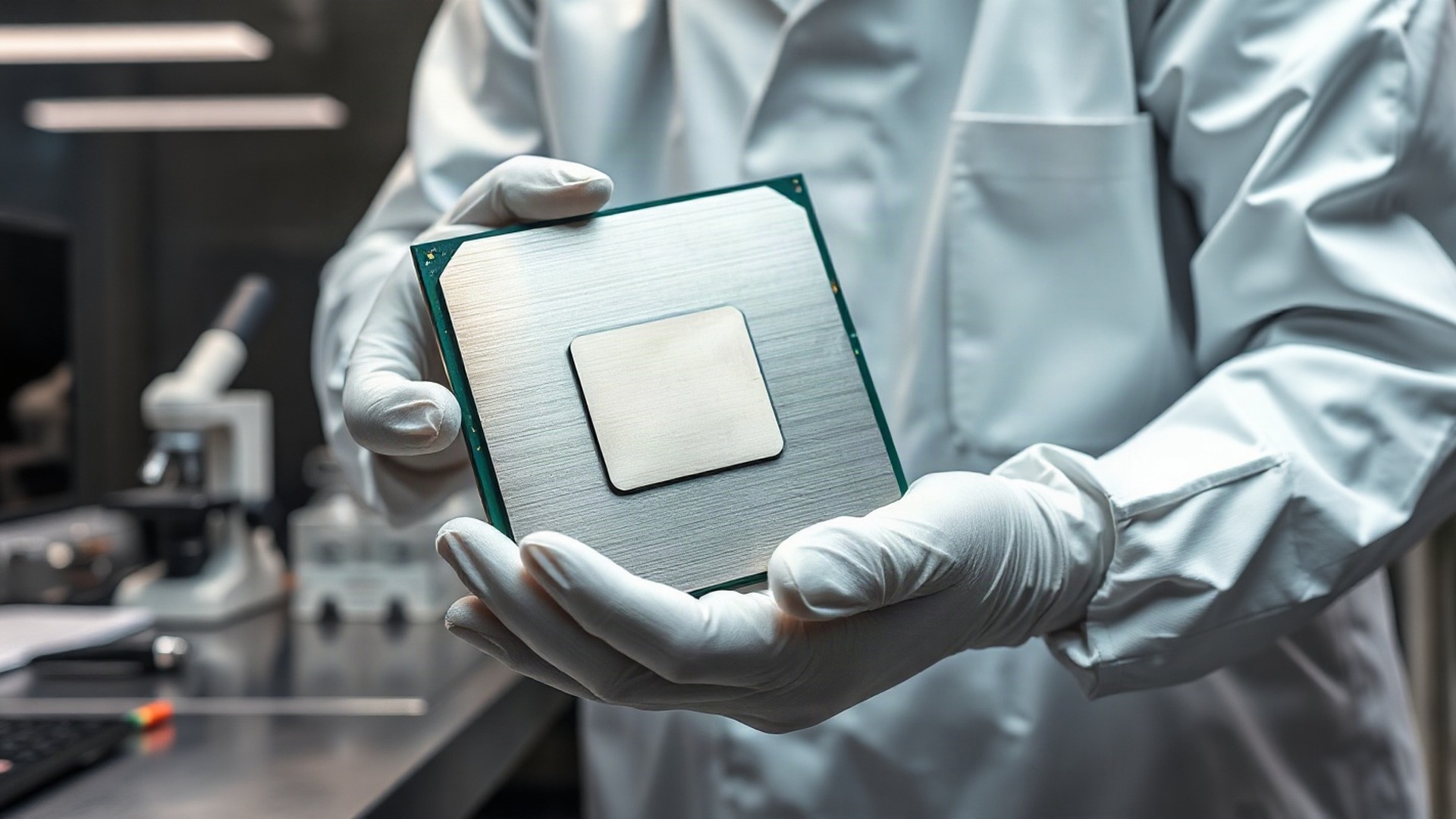
Arm unveiled Neoverse CSS N4 at its Arm Everywhere event Sept. 8. Codenamed Ranger, it's a semi-custom CPU foundation aimed squarely at AI servers, cloud fleets, and the agentic workloads landing on both. Arm bills it as its most configurable compute subsystem yet — and the fastest path from design to shipping silicon.
Normally, Arm licenses a core design and leaves the system integration to someone else. A Compute Subsystem goes further: it's a silicon-proven foundation — cores, cache, memory interface, and I/O, pre-integrated — that a customer configures around its own needs. Some partners will tune it for dense scale-out fleets; others will bend it toward DPUs, networking gear, or specialized AI boxes.
Ranger pushes the formula hard. Up to 128 N4 cores per die at 3.8GHz, built on TSMC's N3P process, with 256MB of shared L3 cache. Memory runs DDR5 or LPDDR6, with 128 lanes of PCIe Gen 6 or Gen 7 and CXL 4.0 hanging off the side.
Arm claims roughly 2x the socket-level performance of its CSS N3 predecessor. Add about 1.25x the performance per watt and 1.75x the memory bandwidth. Neoverse has now shipped more than 1.5 billion cores, half a billion of them in the past nine months.
Why does any of that matter beyond a spec sheet? Because agentic AI changes where the work happens. Software that plans, calls tools, and takes action runs on CPUs — orchestrating models, shuttling context and KV-cache data through memory, keeping accelerators fed. Power efficiency decides how much of that work fits in a rack, and Ranger's efficiency gain is the number cloud buyers shop on.
Fleet owners have spent three years stacking accelerators. The CPUs coordinating them are the next constraint — and the next upgrade cycle.
Arm is already deep in this market. Its designs power AWS Graviton, Google Axion, Microsoft Cobalt, and Alibaba Yitian — custom server chips the big clouds built instead of settling for x86. Arm-based rack servers have overtaken x86 as the dominant accelerated-computing platform, by Arm's count.
CSS is the fast lane into that shift: proven silicon foundations for the next wave of custom designs. Arm's Total Design program lines up partners to shorten the road from license to production silicon. Google already runs agent sandboxes on Axion, and Azure accelerates tool execution with Cobalt 200.
The model pays Arm twice: upfront licensing for the foundation, then a royalty on every chip a partner ships. Data center royalties more than doubled year over year in the quarter Arm reported in late July — record results with total revenue up 22% to $1.29 billion. Fiscal 2026 revenue finished at $4.92 billion, and management's long-range plan points at roughly $25 billion a year.
Arm is also building silicon of its own now — the AGI CPU line it launched in March and expanded at the same event. Demand now exceeds $2 billion across the next two fiscal years, roughly double what Arm originally outlined for the line. For customers that would rather buy than build, the AGI CPU is the ready-made path.
Partner chips or Arm's own, the architecture underneath is Arm's.
The stock tells a different story than the business right now. Shares sold off roughly 8% after the July print on AI-sentiment and smartphone-unit jitters, then recovered — though they still sit more than 40% below their highs. That gap between the tape and the mechanics is where this story gets interesting.
Here's the bottom line. The agentic wave is about to make server CPUs matter again. Arm is positioned on both sides of that shift — partner silicon and its own. GPUs will keep getting the headlines; the blueprints underneath are Arm's business.
Disclosure: The Signal holds no position in ARM. Positions may change. This is not financial advice.