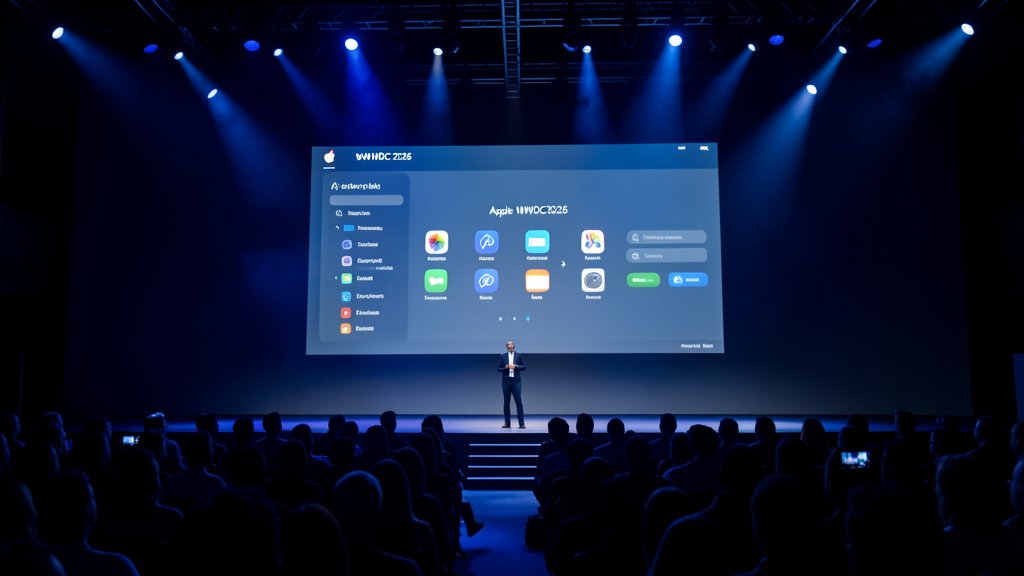
Apple just walked into WWDC 2026 with a Siri so jacked on Google Gemini and Nvidia Blackwell it might actually be useful for the first time since 2011.
And the most interesting part isn't the tech.
It's what Apple isn't saying out loud: we can't build AI chips good enough to compete.
The richest company on Earth — the one that built M-series silicon from scratch and famously refused to touch Nvidia GPUs for a decade — just outsourced its most important AI product to its two biggest rivals. Siri's new brain? Google Gemini. Siri's new heart? Nvidia Blackwell B200 chips. All of it running through Google Cloud. Let that sink in.
The Irony Is Staggering
Apple spent ten-plus years and billions of dollars designing custom silicon. The M1, M2, M3, M4 — those chips embarrassed Intel so badly they triggered an existential crisis in Santa Clara. Apple's silicon team, led by Johny Srouji, is arguably the best in the world at building laptop and phone chips.
But AI training and inference? A completely different beast. And Apple just waved the white flag.
The M-series chips are phenomenal for running AI models locally — they've got unified memory and a neural engine. But when it comes to the massive-scale inference required for a Siri that actually understands you, Apple doesn't have anything that competes with Nvidia's Blackwell architecture. Period.
The Privacy Play Nobody's Talking About
Here's where it gets clever. Apple isn't just dumping your data into Google's lap. The Blackwell B200 chips support encrypted computing — Apple is using Nvidia's confidential computing framework so Google Cloud can't peek at the data. Siri queries get encrypted before they hit Google's servers. Google does the inference. Sends back encrypted results. Apple decrypts them on-device.
It's the most Apple compromise imaginable: admit you need your rivals' hardware, but build a privacy fortress around it so your branding stays intact. Apple Intelligence, they're calling it. The guts are Google and Nvidia. The wrapper is Apple. And honestly? That's genius.
Distribution Is the Moat
Apple doesn't need to build the best AI model. It doesn't need to build the best AI chips. It has something Google and Nvidia will never have: two billion devices in people's pockets, on their wrists, and on their desks.
The strategy is finally clear. Own the UX. Own the distribution. Rent the models and the compute. Let Google and Nvidia fight over who builds the better engine — Apple just needs to build the better car.
This is the smartest AI move Apple has made since Siri launched. It's also the biggest admission of AI weakness in company history. Both things can be true.
The Scoreboard
Bullish for AAPL: Apple finally has a credible AI story after falling behind for two years. Two billion devices with a Siri that doesn't suck? That's not nothing.
Bullish for NVDA: If Apple — the company with the best silicon design team on the planet — can't build competitive AI chips, who can? Nvidia's moat just got validated by its biggest skeptic.
Bullish for GOOGL: Gemini just got distribution to two billion Apple devices. That's the kind of scale even Google's own Pixel line could never deliver.
Apple didn't lose the AI war. It just realized it didn't need to fight it alone.
— The Signal