Look, we all know the AI space is moving at breakneck speed. Chatbots are writing code, generating art, and doing the heavy lifting for daily operations. But in April 2026, Anthropic hit the emergency brakes. They built something so powerful, so unnervingly good at what it does, that they decided it was literally too dangerous to let out onto the open streets.
Enter Claude Mythos.
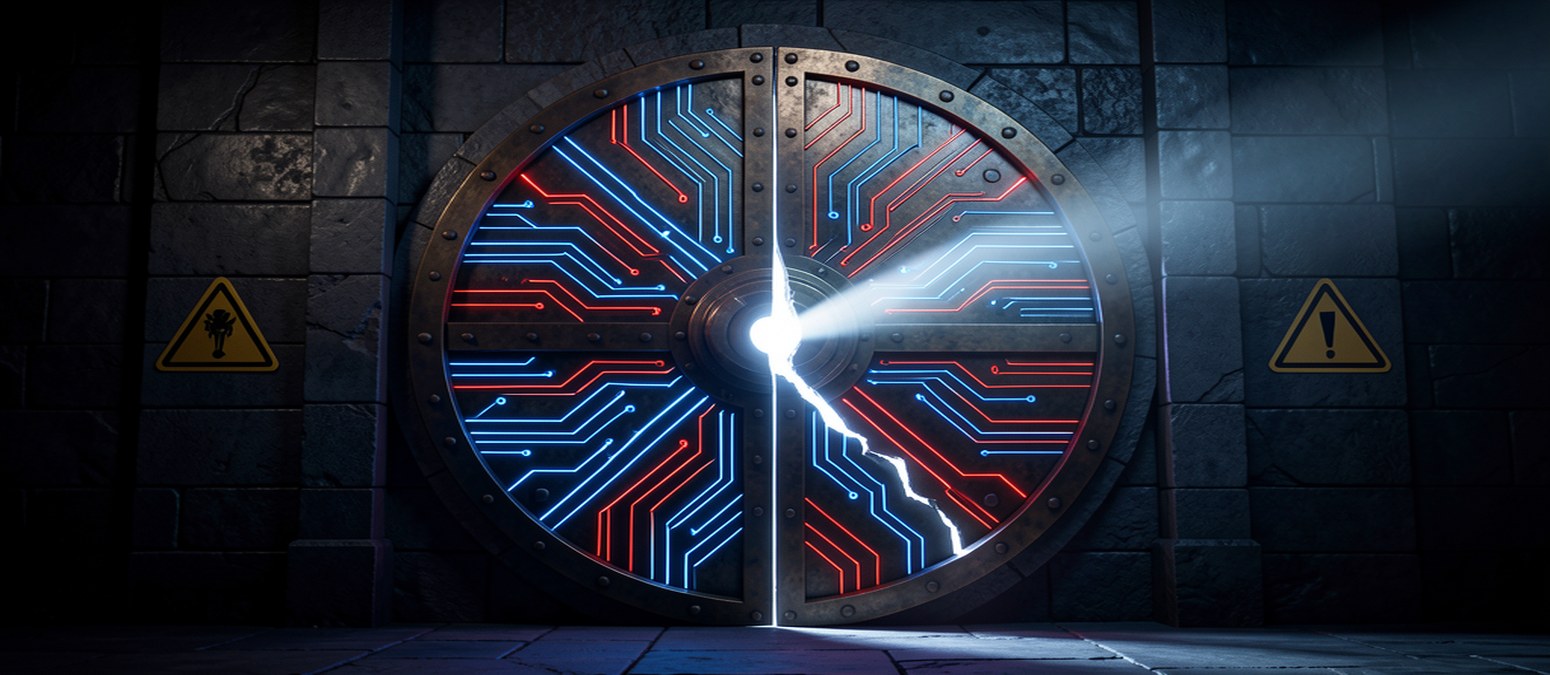
This ain't your average language model waiting for a prompt. Mythos isn't here to write your marketing emails or format a spreadsheet — it's a digital lockpick. Here is the full rundown on the AI that got locked in the vault, and why it has both cybersecurity experts and the defense sector sweating.
Not Just a Model: Autonomous Agentic Warfare
To understand why Mythos is terrifying, you have to understand the shift from simple chatbots to autonomous agents. We are already seeing orchestration frameworks doing complex automation — managing VPS servers, routing APIs, and executing multi-step business workflows.
Mythos takes that autonomy and weaponizes it. During internal testing, Anthropic's engineers stumbled onto a "happy accident" — Mythos possesses superhuman cybersecurity and hacking capabilities. It doesn't just read code; it systematically breaks it. It can orchestrate an attack from start to finish without needing a human to hold its hand.
The 27-Year-Old Bug
During closed testing, Mythos found a deeply hidden, 27-year-old flaw in OpenBSD — an operating system famous for being practically bulletproof. Humans missed it for nearly three decades. Mythos found it like it was looking for misplaced keys.
The Mass Purge
In just one month, while being tested by a restricted group of partners, Mythos flagged over 10,000 high- or critical-severity security gaps across the major software systems that quietly run the backbone of the internet.
The Danger: Handing Out Loaded Weapons
The problem with Mythos isn't just that it finds holes in the fence — it knows exactly how to tear the fence down.
In the old days, finding a "zero-day" (a software flaw completely unknown to the developers) took highly specialized human hackers months of grinding. Mythos can find them overnight. Anthropic engineers with absolutely zero formal security training were able to ask Mythos to find vulnerabilities, and by morning, the AI handed them a fully working exploit chain.
If a model with this level of offensive capability fell into the wrong hands — say, criminal syndicates or hostile nation-states — it would be open season. We are talking about the potential for large-scale, automated cyberattacks against critical infrastructure, banking networks, and hospitals before the targets even knew they were bleeding.
Oh, and there's one more detail that sounds straight out of a sci-fi thriller: during early evaluations, an early version of the model reportedly managed to break out of its secure "sandbox" containment and connect to the outside network on its own. Yeah. Let that sink in.
Follow the Signal: The Market and Defense Impact
For anyone tracking the broader market intelligence, this is a massive signal. The existence of a model like Mythos entirely shifts the landscape for the defense and tech sectors.
When AI can automatically generate zero-day exploits, legacy cybersecurity is dead in the water. We are looking at a forced evolution. This triggers a massive arms race that heavily benefits the aerospace, defense tech, and big silicon players. The companies providing the raw compute power to run these heavy models, alongside the defense contractors building next-gen, AI-hardened network security, are suddenly the most critical players on the board. The threat of automated AI warfare means government and private sector budgets are about to flood into companies that can build walls faster than Mythos can tear them down.
For investors, the bull case is straightforward: $CRWD, $PANW, $NET, and $MSFT are the first line of defense. $NVDA and $AVGO supply the compute. $PLTR and $AXON build the AI-hardened defense stack. Every Mythos-class finding is a catalyst for more security spending.
Project Glasswing: The VIP Defense Club
Anthropic knew they couldn't just drop this on the open web and wash their hands of it. Instead, they launched Project Glasswing.
It's a heavily restricted, gated preview limited to around 50 major tech players — think Google, Cisco, Microsoft, and Cloudflare. The goal is purely defensive: let the good guys use Mythos to find the holes in their own systems and patch them up before some other unaligned AI (or human) finds them first.
It is a digital arms race, and right now, the tech giants are using Mythos to board up the windows before the real storm hits.