Here's a number that should make you stop scrolling: AMD is up 118% year-to-date. That's not a typo. While Nvidia's +45% gets headlines and Palantir's volatility gets clicks, AMD has quietly more than doubled — and the stock is still cheap relative to its AI opportunity.
Q1 2026 was the quarter that changed the AMD narrative forever. Revenue came in at $10.3 billion, crushing the consensus estimate of $9.8 billion and representing 37.8% year-over-year growth from Q1 2025's $7.4 billion. Adjusted earnings per share hit $1.37, beating analyst expectations of $1.29 by nearly 6%. Data Center revenue — the AI proxy that matters most — surged to a record $5.8 billion, up 57% year-over-year and accelerating from the prior quarter's pace. CEO Lisa Su raised full-year guidance, citing surging demand for the MI300 accelerator family across enterprise and cloud deployments.
| YTD Return | +118% |
| Q1 Revenue | $10.3B |
| Q1 Revenue YoY | +37.8% |
| Data Center Revenue | $5.8B |
| Data Center YoY | +57% |
| Adj. EPS | $1.37 |
| EPS Beat vs. Estimate | +5.8% |
| Post-Earnings Surge | +18.6% |
| Net Income (GAAP) | $1.38B |
| Market Cap | ~$762B |
The stock surged 18.6% on May 6 — the first trading day after earnings — marking its biggest single-day gain in years. But here's what most analysts missed: AMD's AI business is now big enough that it can surprise to the upside without needing to steal market share from Nvidia. The AI GPU market is expanding fast enough that both companies can grow. AMD isn't taking from Nvidia's plate — the table is getting larger.
The Data Center Story Is Real
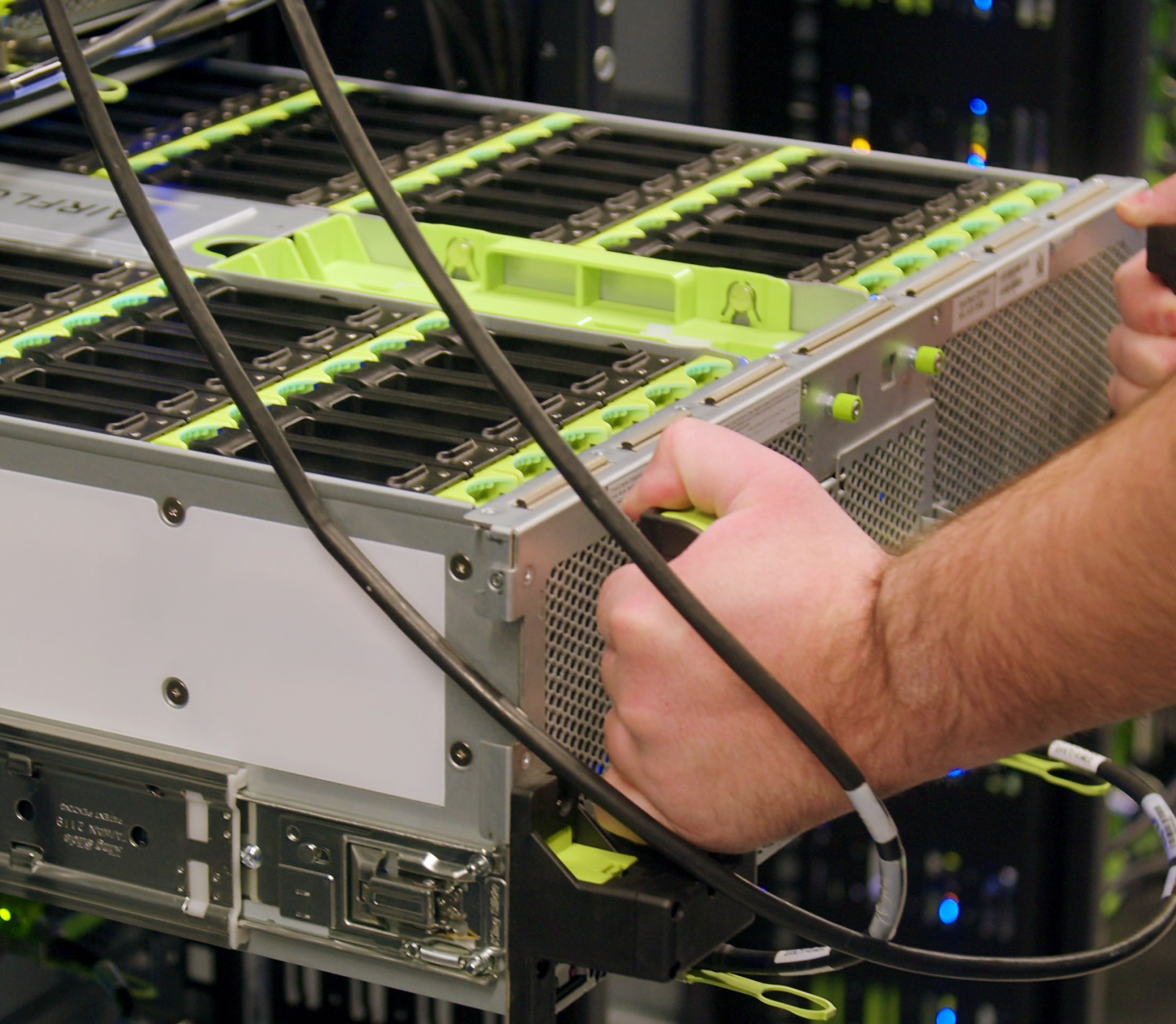
AMD's Data Center segment — which includes the MI300 and MI325X AI accelerators, EPYC server CPUs, and networking — generated $5.8 billion in Q1 2026. That's 57% growth year-over-year and represents 56% of AMD's total revenue. The segment is now larger than AMD's entire business was just two years ago.
What's driving this? Three things:
1. Enterprise adoption is accelerating. AMD's MI300X is winning design wins at major enterprises who are tired of Nvidia's supply constraints and pricing power. The Instinct platform offers competitive AI inference performance at a meaningful discount.
2. Cloud deployments are scaling. Every major hyperscaler — Microsoft Azure, Amazon AWS, Google Cloud, and Oracle — has publicly announced AMD Instinct deployments. These aren't pilot programs; they're production clusters.
3. The software gap is closing. ROCm, AMD's open-source software stack, has matured significantly. Key frameworks like PyTorch, TensorFlow, and vLLM now have first-class AMD support, removing the biggest barrier to adoption.
The Financial Picture
AMD's Q1 2026 gross profit was $5.4 billion (52.8% gross margin), and operating income came in at $1.48 billion. GAAP net income reached $1.38 billion ($0.84 diluted EPS), while adjusted EPS of $1.37 showed the underlying strength of the business after stripping out acquisition-related amortization and stock-based compensation.
The balance sheet is equally robust. AMD holds $12.3 billion in cash and short-term investments against just $3.9 billion in total debt, giving it enormous flexibility to invest in capacity, R&D, and strategic acquisitions. The company has already announced plans to invest $10 billion in Taiwan's AI supply chain over the coming years.
The Valuation Question
At a market cap of roughly $762 billion and a forward P/E of 36, AMD is not cheap by historical standards. But context matters. The company is growing revenue at nearly 38% annually while the AI total addressable market is still in its early innings. AMD's Data Center revenue alone — $5.8B in a single quarter — puts it on a $23B+ annual run rate in its highest-margin segment.
Wall Street expects AMD to generate well over $40 billion in revenue for full-year 2026, which would represent roughly 20% growth from fiscal 2025's $34.6 billion. If Data Center continues to accelerate, those estimates may prove conservative.
The Bottom Line
AMD's 118% year-to-date return is not a speculative frenzy. It's a rational repricing of a company that has transformed from a distant second-place CPU maker into a legitimate AI silicon powerhouse. The MI300 product cycle, the expanding Data Center business, and the closing software gap all point to sustained momentum.
Nvidia is still the 900-pound gorilla with a $2.5T+ market cap and an enormous moat in AI training. But AMD has carved out a meaningful position in AI inference — arguably the larger long-term market — and is executing at a level that warrants serious attention.
The AI #2 narrative is dead. AMD is no longer a consolation prize. It's a contender.
Data sourced from Yahoo Finance and AMD's Q1 2026 earnings report. Stock data as of May 22, 2026.